This article reviews the best mobile crypto wallets for 2026, emphasizing the balance between convenience and robust self-custody. It compares leading wallet apps—such as Tangem Mobile, Trust Wallet, MetaMask Mobile, and Exodus Mobile—highlighting their security models, supported assets, and ideal use cases, while also outlining best practices for safe mobile crypto management. The guide concludes that the right wallet depends on individual needs, with self-custody options favored for control and security, and exchange apps suited for active traders.
The best mobile crypto wallets in 2026 combine convenience with strong self-custody principles. People want to send crypto from a coffee shop, check balances on the train, mint an NFT from their phone, or pay a friend in seconds. At the same time, they want control over their private keys and protection against loss or hacks. This guide compares the best mobile crypto wallets available today, explains how mobile wallet security works, and helps you choose the right crypto wallet app for your daily needs.
What Makes a Mobile Crypto Wallet “Best”?
Not all mobile crypto wallets work the same way. Some give you complete control over your private keys. Others hold your assets on your behalf. Before choosing a wallet, you should understand the key factors that separate a basic app from a strong self-custody solution.
1. Security Model: Custodial vs Self-Custody
A custodial wallet stores your crypto on your behalf. You log in with an email and password, and the provider controls the private keys. A self-custody wallet gives you control over your private keys. You hold the recovery phrase or key material, and you remain responsible for securing it. If you want full ownership and independence from exchanges, choose a non-custodial mobile crypto wallet.
2. Private Key Control
Private keys determine who can access and move your crypto. The best mobile wallets:
Let you control your private keys
Store keys securely on the device
Offer secure backup mechanisms
If you do not control your keys, you do not control your assets.
3. Mobile Security Architecture
A strong mobile wallet integrates with your phone’s security features, including:
Biometric authentication (Face ID, fingerprint)
Secure enclave or hardware-backed key storage
Encrypted local storage
App-level PIN protection
Security also depends on how well the wallet isolates private keys from other apps and network threats.
4. Ease of Use and Onboarding
A good crypto wallet app should guide new users through setup clearly and simply. That includes:
Clear backup instructions
Intuitive transaction flow
Transparent fee display
Easy asset management
Mobile-first design matters. The experience should feel natural on a smartphone.
5. Supported Assets and Networks
The best mobile crypto wallets support:
Major coins like Bitcoin and Ethereum
Popular tokens (ERC-20, BEP-20, etc.)
Multiple blockchains
NFTs, where relevant
Always check if your preferred network is supported.
6. Platform Availability (iOS / Android)
A mobile wallet should support both iOS and Android for broad accessibility. Regular updates and active maintenance also indicate long-term reliability.
7. Use Cases
Different users need different features:
Daily payments
DeFi access
NFT management
Long-term storage
Trading and swaps
The “best” mobile wallet depends on how you plan to use it.
8. Transparency and Reputation
Look for wallets that:
Clearly explain their custody model
Provide open documentation
Maintain a visible development track record
Have a consistent reputation in the crypto space
Trust grows from transparency and time.
Quick Comparison – Best Mobile Crypto Wallets (2026)
Wallet
Custody
Security Level
Platforms
Best For
Key Notes
Tangem Mobile
Self-custody
High
iOS, Android
Secure mobile self-custody
Mobile-first wallet aligned with cold-storage philosophy
Trust Wallet
Self-custody
Moderate
iOS, Android
Beginners and multi-chain users
Easy setup and wide token support
MetaMask Mobile
Self-custody
Moderate
iOS, Android
DeFi and NFT users
Strong Web3 integration
Exodus Mobile
Self-custody
Moderate
iOS, Android
Design-focused users
Built-in exchange functionality
Exchange Apps
Custodial
Platform-based
iOS, Android
Active traders
Exchange controls private keys
This table provides a high-level overview. Below are detailed reviews of each option.
Best Mobile Crypto Wallets Reviewed
1. Tangem Mobile – Best Secure Mobile Wallet for Self-Custody
Tangem Mobile is for users who want a mobile-first crypto wallet built on strong self-custody principles.
Non-custodial model: Tangem Mobile gives users control over their private keys. It does not rely on exchange custody. You remain in control of your assets at all times.
Security-first mobile architecture: The wallet integrates with smartphone security features and focuses on protecting key material through secure storage and authentication mechanisms. It follows a philosophy that aligns closely with cold-storage principles while remaining usable on a mobile device.
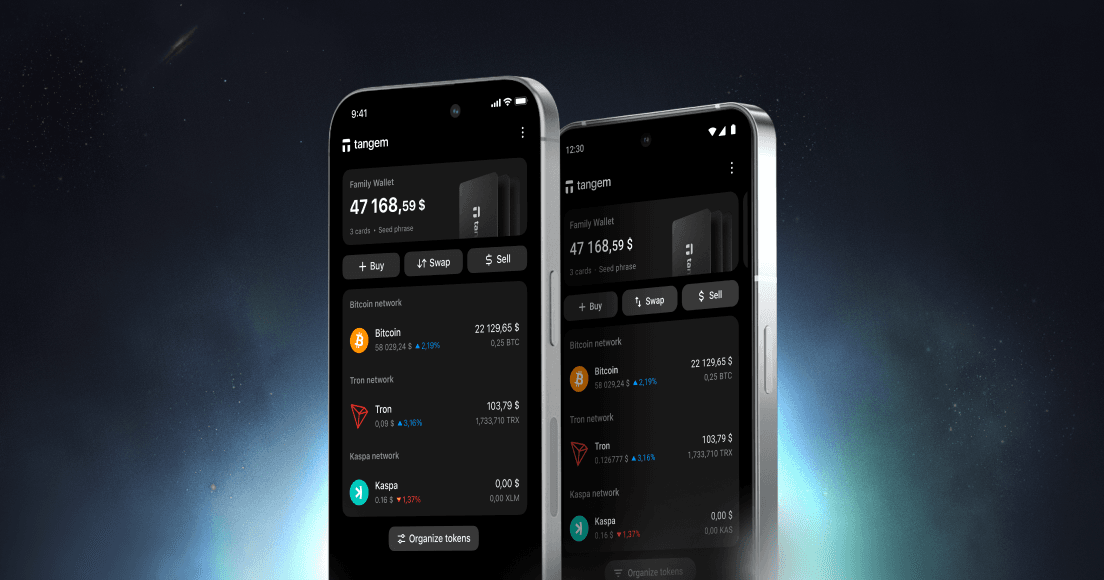
Designed for payments and everyday use: Tangem Mobile supports fast access to crypto directly from a smartphone. You can manage assets, send transactions, and check balances on the go. The experience centers around mobile convenience without shifting custody to a third party.
No reliance on exchanges: You do not need to deposit funds into a centralized platform. Tangem Mobile keeps asset control in the user's hands.
Cold-storage philosophy in a mobile format: While traditional cold wallets isolate keys offline, Tangem Mobile bridges mobile accessibility with a security-focused design. It targets users who want everyday usability without giving up self-custody.
Tangem Mobile works well for people who prioritize control, transparency, and secure mobile payments.
2. Trust Wallet
Trust Wallet offers a mobile-first crypto wallet app designed for simplicity and broad asset support.
Mobile-first design: The interface feels intuitive and clean. New users can set up a wallet quickly and start receiving crypto within minutes.
Multi-chain support: Trust Wallet supports a wide range of blockchains and tokens, making it suitable for users who hold diverse assets across networks.
Simple onboarding: The wallet provides step-by-step instructions for backing up and recovering. Beginners often find it approachable.
Security considerations: Trust Wallet is non-custodial, so users manage their own recovery phrase. Security depends heavily on how carefully users store their backup and protect their devices.
3. MetaMask Mobile
MetaMask Mobile extends the popular browser wallet into a smartphone app.
Mobile version of MetaMask: The app mirrors the desktop experience, allowing users to connect to decentralized applications and manage Ethereum-based assets.
DeFi and NFT access: MetaMask Mobile supports direct interaction with DeFi protocols, token swaps, and NFT platforms. It works well for active Web3 participants.
User-managed private keys: MetaMask is non-custodial. Users control their private keys and recovery phrase.
Security risks if misused: Because MetaMask interacts directly with smart contracts and decentralized apps, users face higher phishing and permission risks. Careful transaction review and contract approval management remain essential.
MetaMask Mobile fits users who regularly engage with DeFi and NFT ecosystems.
4. Exodus Mobile
Exodus Mobile focuses on design and ease of use.
Polished interface: The wallet features a visually appealing layout and a clear portfolio overview. Many users appreciate its presentation.
Built-in exchange features: Exodus allows in-app swaps between supported assets, simplifying portfolio management without requiring you to transfer funds to an external exchange.
Moderate security control: Exodus operates as a non-custodial wallet, but users must manage their recovery phrase responsibly. It does not isolate keys in a separate hardware device.
Exchange Apps – Convenient but Custodial Mobile Wallets
Many centralized exchanges provide mobile apps that function as crypto wallets.
Custodial model: The exchange holds users' private keys on their behalf. You log in with account credentials rather than a recovery phrase.
Convenient for trading: Exchange apps make buying, selling, and trading crypto easier. They often integrate advanced order types and liquidity tools.
No private key ownership: Because the exchange controls the keys, users depend on the platform’s security and solvency.
Not ideal for long-term storage: Exchange wallets are suited to active trading but not to long-term self-custody. Users who want direct ownership typically move funds to non-custodial wallets.
Exchange apps function as mobile wallets in practice, but they operate under a custodial structure.
Mobile Wallets vs Hardware Wallets – Key Differences
Use Case
Mobile Wallet
Hardware Wallet
Daily payments
Yes
Limited
On-the-go access
Yes
No
Long-term storage
Not recommended
Yes
Self-custody
Depends on the wallet
Yes
Mobile wallets prioritize accessibility and speed. Hardware wallets prioritize isolation and long-term protection. If you transact frequently, a mobile crypto wallet makes sense. If you store large amounts for long periods, hardware wallets offer stronger isolation from online threats.
How Mobile Wallet Security Works
Most non-custodial mobile wallets store private keys locally on your device. They encrypt this data and protect access with:
PIN codes
Biometrics
Device-level encryption
Some wallets use hardware-backed secure elements within smartphones to protect sensitive information.
The Role of the Smartphone OS
Modern operating systems such as iOS and Android include:
Sandboxing between apps
Encrypted storage
Secure boot mechanisms
These features help protect wallet data from unauthorized access. However, rooted or jailbroken devices weaken these protections.
User Behavior Matters
Security also depends on user habits:
Installing unverified apps increases malware risk
Clicking phishing links can compromise funds
Poor recovery phrase storage creates a risk
Custodial vs Self-Custody Risk
Custodial mobile wallets shift risk to the provider. If the platform experiences a breach or suspension, users may lose access. While self-custody wallets remove platform risk, they place responsibility on the user. If you lose your recovery phrase, you cannot recover funds. Mobile crypto wallets remain safe when users combine strong device hygiene with responsible key management.
Best Practices When Using a Mobile Crypto Wallet
To reduce risk, follow these guidelines:
Use Mobile Wallets for Small to Medium Balances: Keep extensive long-term holdings in a hardware wallet or cold storage solution. Use mobile wallets for everyday transactions and keep balances manageable.
Enable Biometric Authentication and App Locks: Activate Face ID, fingerprint authentication, and in-app PIN protection. These features add another barrier against unauthorized access.
Keep Your Operating System Updated: Install official iOS or Android updates promptly. Updates patch security vulnerabilities that attackers may exploit.
Avoid Installing Unverified Apps: Download wallet apps only from official app stores. Avoid third-party APK files or unknown sources.
Separate Mobile and Long-Term Funds: Maintain a clear separation between spending funds and savings. Treat your mobile wallet like a checking account, not a vault.
These practices significantly reduce avoidable risk.
How to Choose the Right Mobile Crypto Wallet for You
The best mobile wallet depends on your goals.
For mobile payments, Tangem Mobile suits users who want strong self-custody, a mobile-first design, and everyday usability.
For DeFi and NFTs: MetaMask Mobile supports direct interaction with decentralized applications and token ecosystems.
For beginners: Trust Wallet offers a straightforward setup process and broad asset support.
For active trading: Exchange apps provide integrated trading tools and liquidity, though they operate under custodial control.
Define your primary use case first. Then match the wallet’s design and custody model to your needs.
FAQ about Best Mobile Crypto Wallets
What is the best mobile crypto wallet?
The best mobile crypto wallet depends on your priorities. Tangem Mobile suits users focused on secure self-custody. Trust Wallet works well for beginners. MetaMask Mobile fits DeFi and NFT users.
Are mobile crypto wallets safe?
Mobile crypto wallets can be safe when users enable device security, protect recovery phrases, and avoid phishing attempts. Non-custodial wallets require careful key management.
What is the most secure mobile crypto wallet?
Self-custody wallets that integrate strong device-level protection and precise key control offer higher security than custodial exchange apps. For maximum isolation, hardware wallets remain the preferred choice for long-term storage.
Are exchange apps considered mobile wallets?
Yes, exchange apps function as mobile wallets, but they operate under a custodial model. The platform controls private keys.
Can you store Bitcoin in a mobile wallet?
Yes. Most mobile crypto wallets support Bitcoin. You can send, receive, and store BTC directly on your smartphone. Always confirm that the wallet supports native Bitcoin transactions before transferring funds.
Final Thoughts
Mobile crypto wallets in 2026 offer a balance between accessibility and control. They allow users to manage digital assets directly from their smartphones while retaining ownership in non-custodial models. When used responsibly and paired with long-term storage strategies, they form a practical part of a broader crypto security approach.
Limited-Time Offer
20% OFF + up to $20 in BTC 🛍️
Selected Wallets
Ends March 16
 + Up to $20 in BTC till Apr 6