EXTRA −10%
Self-Custody vs Exchange: Which Is Safer in 2026
Ця стаття доступна такими мовами:
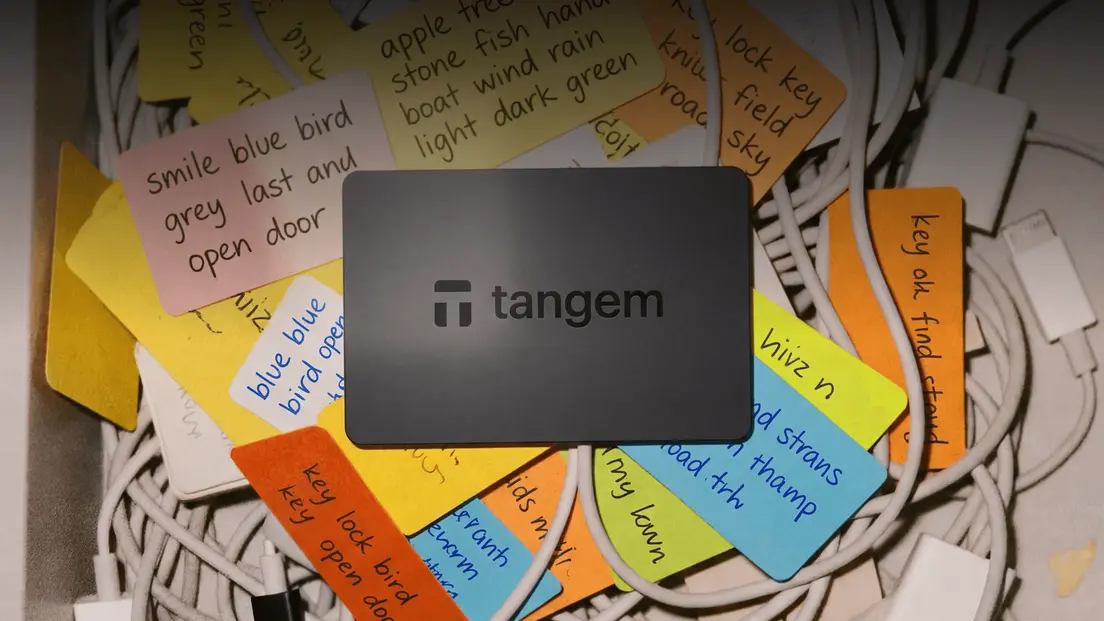
Where you store crypto determines who actually controls it. For assets you're holding rather than actively trading, a self-custody wallet eliminates the risk that a company's failure, regulatory action, or an account freeze would affect your access. An exchange is more convenient for active trading and converting to fiat, and that convenience is the trade-off. Most people don't need to pick one or the other permanently. The more useful question is: which assets belong where?
What an Exchange Balance Actually Is
When you deposit crypto to an exchange, the exchange typically holds those funds in pooled or omnibus wallets. Your balance is an internal ledger entry, not a separately identifiable on-chain position you control. Send 100 USDC from a Tangem Wallet to an exchange, and the exchange credits your account. It doesn't assign you a separate on-chain wallet balance. That distinction matters more than most people realize.
Here's what it means in practice: you hold a contractual claim against the platform, not direct control over a specific cryptocurrency through private keys. If the platform becomes insolvent, the legal treatment of your balance depends on the platform's terms, asset segregation, applicable law, and how a court characterizes your claim. Commingled or inadequately segregated assets may become part of the bankruptcy estate, leaving customers with unsecured creditor status rather than property rights.
Exchange-side risks documented in the research include platform hacks, insolvency, regulatory action, account freezes, and fraud. Account recovery can sometimes be available through the provider, which is genuinely useful. But the access is conditional on the platform remaining operational and willing to serve you.
Custodial storage means the exchange controls the private keys. You control the interface.
What Self-Custody Changes
In self-custody, a wallet generates a public/private key pair. The private key authorizes transactions and stays under your control. Nobody else holds it. The terms self-custodial, non-custodial, and self-hosted all describe this same model.
That shift removes specific risks: a third party cannot freeze your funds, become insolvent in a way that affects your access, or face a regulatory action that locks you out. In H1 2025, crypto-platform thefts totaled $2.47 billion, exceeding the total for all of 2024. Self-custody doesn't eliminate the risk of theft, but it changes the attack surface from "can the platform be compromised at scale" to "can this specific user be targeted."
Hardware wallets take self-custody a step further. They generate and keep private keys offline, signing transactions internally without exposing the keys to an internet-connected environment. The Tangem Cold Wallet, for instance, stores private keys on a Samsung S3D350A secure element certified to Common Criteria EAL6+. The private key is generated within the chip, remains in tamper-resistant memory, and never leaves it. Signing happens on-chip; the app broadcasts the result.
The architecture also removes some common hardware-wallet friction. Tangem cards require no USB connection, battery, Bluetooth, or charging. They draw power from the NFC field during use, within a range of 0-5 cm.
Where Exchanges Win
Exchanges offer things self-custody genuinely cannot match, and it's worth being direct about that.
Fiat on- and off-ramps are the clearest example, where supported by local banking partners and regulations. You can convert crypto to dollars, euros, or other currencies and withdraw to a bank account. Self-custody wallets don't do that natively. Centralized exchanges also provide operator-run order books, deeper liquidity, faster execution, and access to margin trading, futures, and other derivatives that are unavailable or restricted on decentralized platforms.
Recovery is another real advantage. If you forget your exchange password, the platform can verify your identity and restore access. That's not available in self-custody. The vault's comparison characterizes this as provider-assisted account recovery and inheritance handling, both of which are genuine custodial advantages.
- The convenience gap is real for active traders. Executing multiple trades per day through a self-custody wallet is slower and more expensive than an exchange order book. For that use case, exchanges are the right tool.
The Risks of Self-Custody
Self-custody transfers platform risk to personal risk. The main failure modes are specific and worth naming.
Lost keys or seed phrases. In a traditional wallet, a seed phrase is the master key. Anyone who has it controls the funds. Lost, damaged, digitally exposed, or single-location backups are all documented failure modes. Loss of a private key or seed phrase can permanently remove access because there is no provider recovery process.
Transaction errors. Sending to the wrong address, confirming the wrong transaction, or bridging to an incompatible network are irreversible once the blockchain has confirmed the transaction. There is no dispute resolution.
Phishing and malware. The vault reports $410.75 million in phishing losses by crypto users in the first half of 2025. Fake wallet apps, fraudulent support accounts, and spoofed websites can induce a user to approve a draining transaction. Hardware wallets reduce this risk significantly because the signing key never touches an internet-connected device, but they don't eliminate social engineering.
- Inadequate backups. A hardware wallet with a single backup card, or a seed phrase stored in one physical location, creates a single point of failure. A fire or flood can permanently cut off access.
The Tangem seedless model specifically addresses seed-phrase risk. In the default configuration, the private key lives on two or three cards; any card in the set provides full access. The seed phrase attack surface is removed by default, though it's available as an optional BIP39-compatible setting. If all cards are lost or destroyed without a seed phrase backup, funds are permanently inaccessible.
Side-by-Side Comparison
| Axis | Exchange (Custodial) | Self-Custody |
|---|---|---|
| Key control | Exchange holds private keys | User holds private keys |
| Recovery | Provider-assisted | User's sole responsibility |
| Primary loss risk | Platform hack, insolvency, regulatory action | User error, lost keys, device compromise |
| Privacy | KYC typically required; platform monitors activity | No account registration or KYC for basic use |
| Fiat access | Direct fiat on/off-ramps | Not natively available |
| Active trading | Order books, margin, derivatives | Slower; on-chain swaps only |
| Freeze risk | Platform or regulator can freeze access | Third party cannot freeze funds |
| Insurance/compensation | Varies by jurisdiction; crypto often excluded | Not applicable |
The comparison frames the choice as a matter of convenience and recovery options on the custodial side versus control and personal responsibility on the self-custody side. The safer option depends on the assets' purpose and on your ability to manage keys and backups.
Staking and Earning: A Note
Staking through an exchange means the platform controls the keys during the staking period. Non-custodial staking keeps private-key control with the user. With Tangem, a transaction is signed after an NFC card tap within the documented 0-5 cm range. That's the same custody distinction applied to yield.
One practical constraint applies to both: staked tokens may not be transferable or saleable until they are unstaked and the applicable unbonding period has ended. That liquidity limitation exists regardless of whether you stake through an exchange or a self-custody wallet.
A Practical Middle Ground
The recommendation most readers will actually follow: keep on an exchange only what you are actively trading or about to spend, and hold longer-term positions in self-custody.
Match each balance to its job. Active trading funds need fast execution, liquidity, and fiat access, so an exchange is a good fit. Long-term holdings are well-suited to cold storage because platform access remains outside the holder's control.
A hot-wallet/cold-storage split works similarly. Keep a small spending balance accessible in a hot wallet or on an exchange, and move the bulk of holdings to cold storage. A hot wallet compromise, then, doesn't affect long-term savings.
Here's the practical question to ask for any position: if this exchange went offline tomorrow, would I need to access these funds within the next 30 days? If the answer is no, those funds are candidates for self-custody.
Tangem Pay offers one way to bridge the gap. It's a non-custodial payment account embedded in the Tangem Wallet app, designed for top-ups with native USDC on Polygon, USDT, or via bank transfer (ACH or Fedwire), and for spending through a virtual/physical Visa card. The documented flow deposits funds into a smart contract the user controls, converts USDC 1:1 to USD at purchase, and processes the transaction via Visa. The card can be added to Apple Pay or Google Pay.
Tangem Pay requires one-time KYC, a Tangem Mobile wallet, and a supported region; it launched initially in the USA, Latin America, and Asia-Pacific, with the UK and EU planned for 2026. Zero purchase, monthly account, or virtual card issuance fees on Tangem Pay, though Polygon gas fees apply when funding, and Visa foreign exchange rates apply to non-USD spending. Freezing a Tangem Pay card disconnects it from the Visa network but does not affect the user's on-chain USDC balance. That's a meaningful distinction from an exchange freeze.
How to Move Assets Off an Exchange
The process is straightforward, but the order matters.
First, set up your self-custody wallet and confirm it's working before moving anything substantial. For Tangem, generate the wallet on the card. The private key is created inside the secure element and never leaves it. Then confirm the app reads it from a card tap within the documented 0-5 cm NFC range. Then move a small test amount first. Complete the full send-and-receive cycle, verify the balance appears in your wallet, and confirm you can access it before committing funds that would be costly to lose.
When you're ready to withdraw from the exchange: verify the receiving wallet address and the supported network; check the exchange's current withdrawal minimums and any daily or weekly limits; confirm the network fee shown on the withdrawal screen before approving; and send in staged transfers if the amount is large.
On the tax question: a transfer between wallets you control is generally not a taxable sale because ownership doesn't change. Selling for fiat is a sale of property under IRS guidance. Confirm your jurisdiction's rules before moving large amounts, since tax treatment varies.
For traditional seed-phrase wallets, a secure backup practice is to store the phrase in at least two separate physical locations and test recovery before storing large amounts. A seed phrase stored in one place is a single point of failure: anyone who finds or photographs the written words can drain the wallet without ever touching the hardware device.
If you're using Tangem, a replacement phone doesn't change wallet access. The private keys are on the card. Install the app on a new device and tap the card to restore full access. Get your Tangem Wallet
FAQs about Self-Custody and Exchanges
-
For assets you're holding rather than trading, a self-custody wallet removes the risk that a company's failure or restrictions affect your access. An exchange is more convenient for active trading and fiat conversion, and that convenience is the trade-off. Self-custody is not categorically safer for everyone: it removes third-party risk while adding personal key management responsibility.
-
There is no universal percentage. Match the exchange balance to a concrete near-term use, then put longer-term holdings in self-custody. Funds you are actively trading or about to spend need exchange access; the rest may not.
-
Verify the receiving address and supported network, then check the exchange's withdrawal minimums, limits, and displayed network fee. Send a small test amount first, verify that it arrives, and confirm you can access the wallet before moving a larger balance.
-
Tangem cards are sold in sets of two or three. In the default configuration, either remaining card retains access to the wallet. Cards cannot be added after setup is finalized, so store the remaining cards separately and preserve the chosen recovery method.
-
Provider-assisted inheritance handling is a custodial advantage, so it can matter when that service is important to you. Self-custody requires you to preserve access to the cards or an optional seed phrase, because no provider can restore those credentials.
-
The main risks are lost keys or seed phrases (with no provider recovery process), transaction errors (irreversible once confirmed on-chain), phishing and malware (the vault reports $410.75 million in phishing losses by crypto users in H1 2025), and inadequate backups. Hardware wallets reduce the malware and phishing risk by keeping the signing key offline, but they don't eliminate user error.
-
No. Wallet access remains tied to the user's cards and blockchain addresses, not to Tangem's servers. The user remains responsible for preserving access to those cards or an optional seed phrase. The private keys are on the card's secure element, not on any Tangem infrastructure. The Tangem app is open-source and available on GitHub, so the functionality can be replicated independently.