Переходьте на seedless. Знижка 30% з SWITCH30 до 21 жовт.
Crypto Security: Phishing, Malware and Physical Attacks
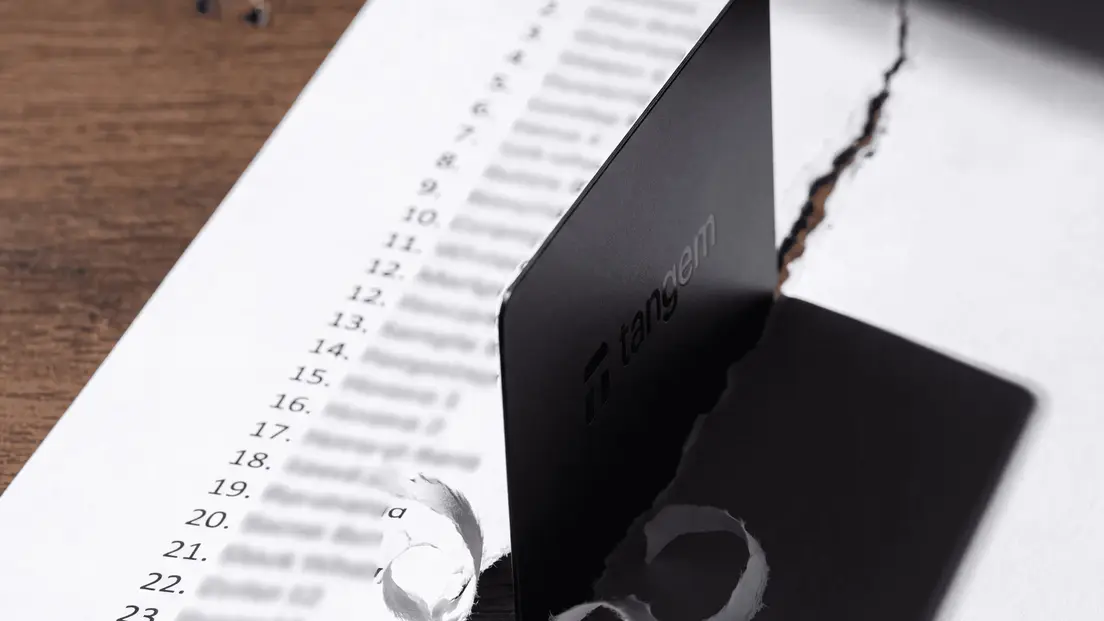
Most crypto losses don't come from a sophisticated zero-day exploit. They come from a fake website, a clipboard swap, or a seed phrase written on a sticky note. Understanding which attack is most likely to hit you is more useful than trying to defend against every threat simultaneously.
This guide maps the realistic attack surface for self-custody users, explains how each path works at a high level, and gives you concrete controls to apply, along with an honest account of what those controls don't cover.
Understand the Threat Model
In self-custody, you control the private keys. A wallet uses those keys to sign transactions that are then broadcast to the blockchain. That single fact defines your entire threat surface: anyone or anything that can reach your keys, your seed phrase, or your transaction-approval flow can take your funds.
The primary self-custody loss risks break into six categories.
Supply-chain compromise happens before you even set up the device. An attacker modifies the hardware, firmware, components, packaging, initialization process, or distribution channel before the device reaches you, potentially enabling key leakage or unauthorized transaction signing.
Phishing is the most common path for most users. A fake website, social-media page, or email prompts you to connect a wallet and then asks for a private key, seed phrase, or a broad wallet approval.
Malware on an infected device can capture keystrokes, clipboard data, or locally stored private keys. Software wallets on general-purpose devices carry that exposure directly.
Malicious approvals occur when a user grants a smart-contract permission they don't fully understand. The approval may sit dormant until an attacker drains the wallet.
Physical access covers device disassembly, chip analysis, side-channel measurement of power or electromagnetic emissions, and tampering after temporary physical access (sometimes called an "evil maid" attack).
- Recovery-backup failure is the quieter risk. A seed phrase is a 12- or 24-word human-readable backup that can regenerate associated keys, so anyone who has it controls the funds. A single backup in one location can fail through fire, flood, theft, or misplacement.
Not all of these are equally likely for a given user. The threat model that matters is yours: what you hold, how you use it, and the realistic ways an attacker could reach your keys.
How the Attack Path Works
Here's how each category actually reaches your funds.
Phishing typically starts with a convincing fake. A fraudulent website copies a legitimate project's branding, a social-media account impersonates a support team, or an email announces an "airdrop." The payload is the same in almost every case: a prompt to connect your wallet, then a request for your private key, seed phrase, or a transaction signature that grants broad spending permission. Fake tokens or NFTs can also be sent unsolicited to a wallet to draw you to a fraudulent "claim" or "unlock" site.
Malware works differently. It doesn't need you to hand anything over. It watches. Keystroke loggers capture passwords as you type them. Clipboard hijackers replace a copied wallet address with the attacker's address at the moment you paste. A hot wallet's persistent internet connection and dependence on the security of its host device expand exposure to all three of these vectors.
Supply-chain compromise targets trust itself. A compromised build system, signing process, update channel, or distribution mechanism delivers malicious functionality through what looks like a legitimate product or update. The compromised device or software enters your environment with trusted status, then uses that status to access systems, exfiltrate data, or establish remote control.
- Physical-device compromise can happen during manufacturing, transit, or distribution through altered components, firmware, bootloaders, or counterfeit hardware, creating persistent unauthorized access after deployment. It can also happen post-purchase if an attacker gains temporary physical access to a device.
The common thread across all four paths: the attacker is trying to reach keys, recovery material, or your ability to approve transactions. Every control you apply should map back to blocking one of those three targets.
Controls That Reduce Exposure
The good news: most of these paths are interruptible. Here's where to focus.
Verify before you connect. Check the URL before connecting a wallet to any site. Verify a project through its official website, blog, and social channels before interacting. No legitimate airdrop, wallet, or protocol needs your private key or seed phrase. That's a hard rule with no exceptions.
Audit your approvals. Review wallet approvals regularly and revoke access for untrusted applications. A dormant approval from months ago can be exploited long after you've forgotten granting it.
Move keys offline. Hardware wallets generate and store private keys offline, sign transactions internally, and don't expose the private key to an internet-connected environment during transaction handling. That single design choice removes malware and clipboard-hijacking from the equation for the signing step.
Separate your balances. Keeping a smaller active balance in a hot wallet and the bulk of holdings in cold storage limits the damage if the active wallet is compromised. The attacker reaches the hot wallet; the cold storage stays untouched.
Protect your recovery material. Keep seed-phrase backups in at least two physically separate locations on durable offline media, and test the recovery procedure before you rely on it. A backup you've never tested is a backup you don't actually have.
- Buy from official sources. Purchasing hardware wallets directly from the manufacturer or authorized resellers reduces supply-chain exposure. Check packaging integrity on arrival.
| Attack vector | Primary control | What it doesn't prevent |
|---|---|---|
| Phishing | Verify URLs and source; never share keys | Social engineering that bypasses your check |
| Malware | Hardware wallet for signing; clean devices | Malicious approvals you confirm yourself |
| Supply chain | Buy from official source; verify device integrity | Sophisticated factory-level compromise |
| Physical access | Access codes; physical security of cards/devices | Coercion; loss of all backup copies |
| Recovery failure | Two geographically separate backups | Fire/flood at both locations simultaneously |
| Malicious approvals | Review and revoke approvals regularly | Approvals you grant without reading |
Limits and Trade-offs
Hardware wallets reduce exposure of private keys to internet-connected devices. That's real. But a user can still be deceived into interacting with a fraudulent site or granting a risky approval. The hardware wallet signs what you tell it to sign.
Self-custody removes counterparty risk but places responsibility for private-key and recovery-material management entirely on you. If those are lost, there is no recovery process. No password reset, no support-team escalation, no dispute mechanism.
Cold storage trades day-to-day convenience for stronger isolation of private keys from online systems. That trade-off is worth making for long-term holdings; it's less practical for funds you need to move frequently.
Errors in self-custody can be irreversible. Sending to a wrong address or confirming a wrong transaction doesn't trigger a chargeback. The blockchain doesn't care about intent.
Here's the honest framing: security controls reduce the probability of specific attacks. None of them reduce it to zero. The goal is to make the most likely attacks against your specific situation significantly harder, not to achieve a theoretical guarantee.
How Tangem's Design Reduces Specific Attack Vectors
Tangem Cold Wallet is a self-custodial hardware wallet built around an NFC-enabled card. Its design choices map directly onto several of the attack vectors above.
The card has no USB port, no battery, and no Bluetooth connection. That removes the firmware-update channel that supply-chain attacks often exploit: Tangem's firmware is factory-installed and cannot be updated after production. The app verifies the authenticity of the card and its firmware before operations, providing a check against counterfeit devices.
The secure element is a Samsung S3D350A chip certified at Common Criteria EAL6+. Private keys are generated and stored exclusively on-chip using a DRAM-based True Random Number Generator. Cryptographic signing takes place on-chip; the private key never leaves the card.
NFC communication operates within 0-5 cm, uses AES-256 encryption, and requires physical proximity. Remote signing is not possible. That limits physical-access risk to scenarios where an attacker has both your card and your phone.
For recovery, the default seedless setup generates private keys on-chip without creating a seed phrase, removing the seed-phrase exposure path entirely. Users who prefer compatibility with other wallets can optionally generate a BIP39 phrase, but Tangem's documentation notes that doing so reintroduces seed-phrase vulnerability.
Starting with app version 5.27, the Tangem app includes Blockaid-powered Know Your dApps (KYDA), transaction-simulation previews, and Verified Transactions (VTX) for WalletConnect sessions. These tools show human-readable balance changes before you sign and flag suspicious dApps automatically.
What Tangem's design doesn't prevent: phishing attacks that trick you into approving a malicious transaction, user errors like sending to a wrong address, loss of all cards with no seed-phrase backup, or coercion. If all cards are lost and no seed phrase exists, funds are permanently inaccessible. That's the honest trade-off of the seedless model.
Independent firmware audits are listed from Kudelski Security and Riscure, and the Tangem app code is available on GitHub.
Поширені запитання
-
No. A hardware wallet keeps private keys in an isolated environment rather than exposing them to an internet-connected device, but it doesn't replace careful review of sites, transactions, and approvals. Phishing, malicious approvals, unsafe recovery backups, coercion, and supply-chain or physical attacks remain possible regardless of the device you use.
-
Map what you protect, how you use it, and the realistic ways an attacker could reach your keys, recovery material, or transaction-approval flow. Then apply controls to the highest-impact paths first. A beginner with modest holdings faces different realistic threats than someone managing significant cold storage.
-
Seek trusted, independently verified help when assets may be actively at risk or a device appears compromised. Never share a seed phrase or private key with support staff or anyone offering recovery. Preserve transaction hashes, wallet addresses, screenshots, device logs, and related communications before changing systems, and report through official wallet-provider or jurisdictional channels.
-
Stop interacting with suspicious apps, links, contracts, and signing requests immediately. Move to a trusted device before taking further action. If a seed phrase or private key may be exposed, create a new wallet on a trusted device and transfer remaining assets there. Don't reuse the compromised wallet.
-
It removes the seed-phrase exposure path, which is a real reduction in one specific risk. But it introduces a different trade-off: if all physical cards are lost with no seed phrase as a fallback, funds are permanently inaccessible. The right choice depends on which risk you're more concerned about managing.