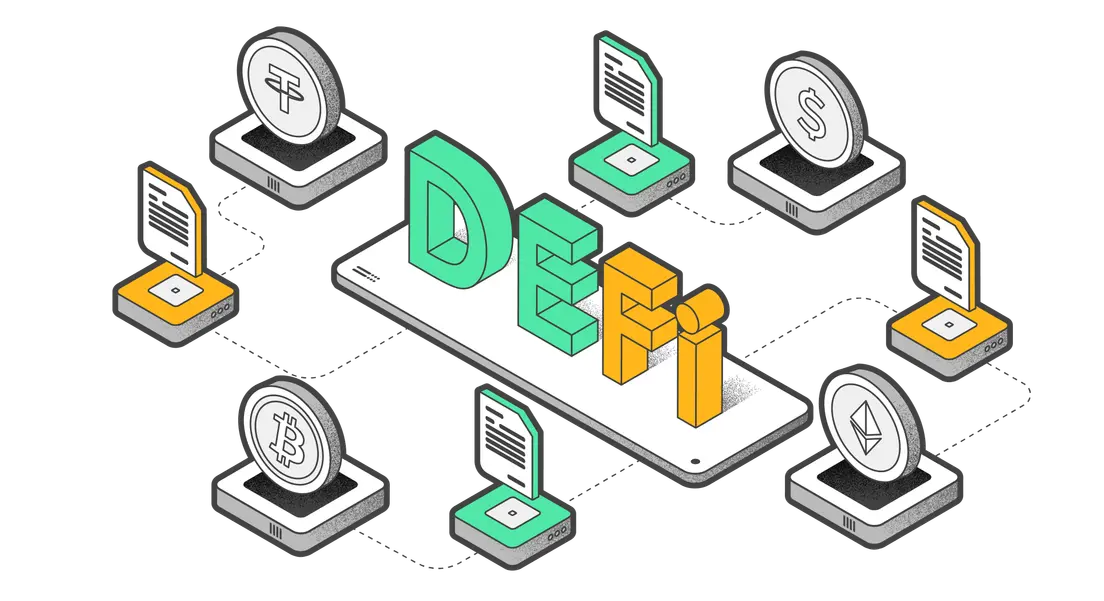
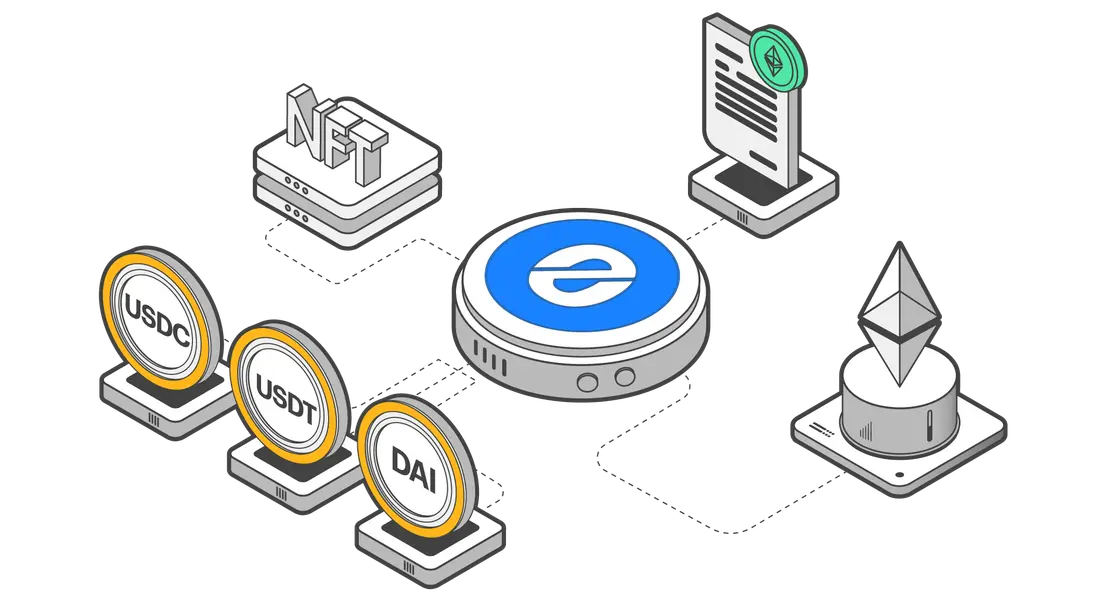
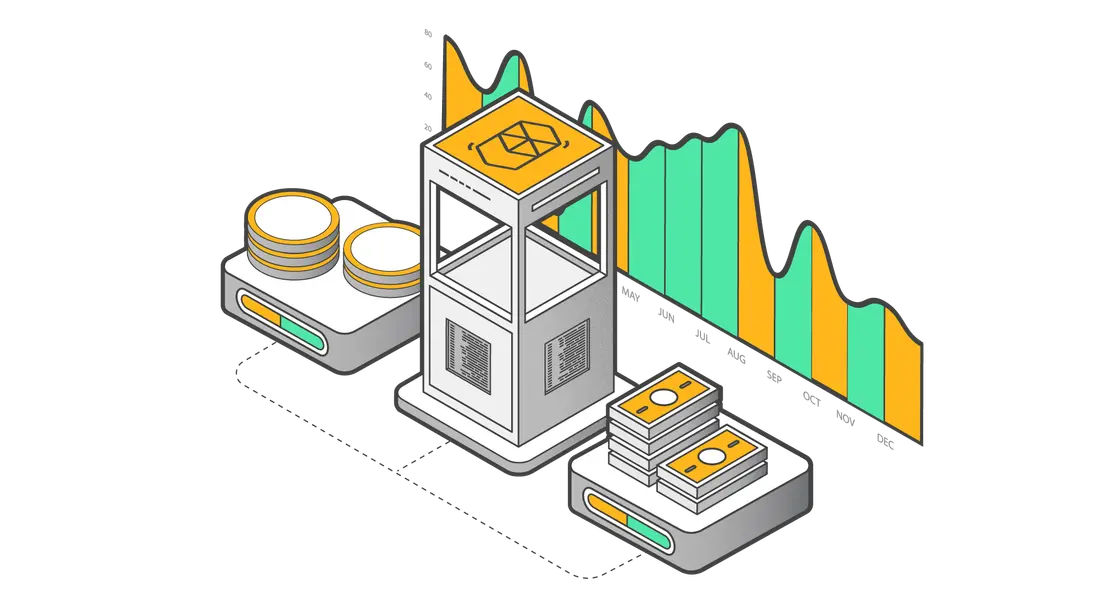
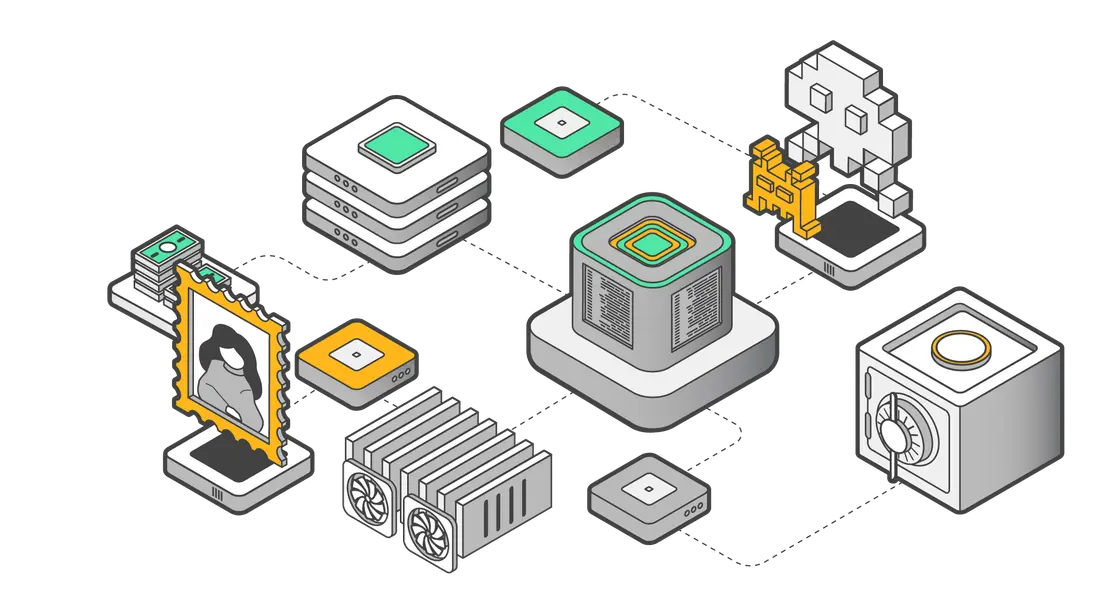
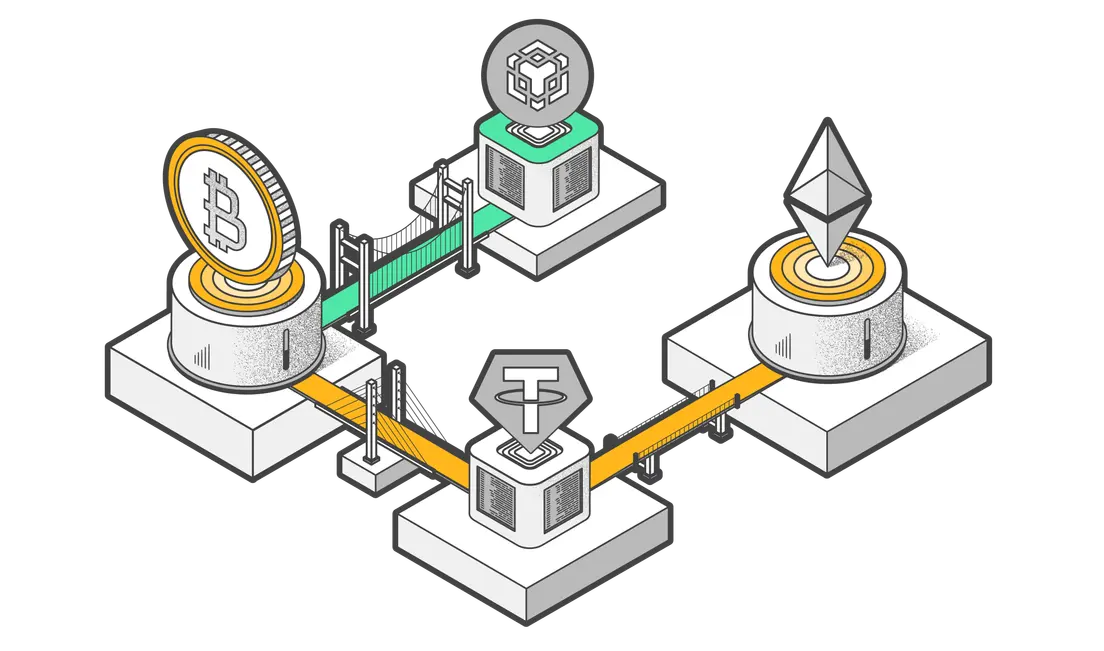
Real-world assets (RWAs) are crypto tokens that represent real-world assets. These assets can include stocks, bonds, real estate, commodities, and machinery. RWAs bring these assets into the Decentralized Finance (DeFi) space, making them more accessible and opening up new opportunities.
Tangem Wallet is the most reliable crypto wallet you could ask for. Simplicity, self-custody, security—it's all there. You can easily buy, sell, swap, and manage Bitcoin and other popular cryptocurrencies.
Understanding RWAs
RWAs represent valuable assets that everyone recognizes. Their value and ownership are accepted worldwide, making them suitable for transactions, investments, and other financial activities.
Bringing recognized assets onto the blockchain is one of the biggest stories in crypto right now. What started as a niche narrative in 2024 has grown into a market worth tens of billions of dollars, with names like BlackRock, Franklin Templeton, Binance, Kraken, and Robinhood all issuing or trading tokenized assets in 2026.
Tokenization lets these assets exist as tokens on a blockchain, so you can buy, sell, or trade them online in minutes. This blend of traditional assets with digital technology aims to improve liquidity, accessibility, and transparency for buyers and asset owners.
Why RWA tokens are significant
Traditional assets represent a significant portion of global financial value, and investing in them often requires a lot of money upfront. While available in various amounts, bonds typically require a substantial investment, keeping many people out of the market. Restrictions based on country laws can further limit access to these assets, often leaving only wealthy individuals able to invest.
Crypto RWA tokens make it easier for people to invest by allowing fractional ownership. This means you can buy tokens representing parts of assets. This access opens doors for many who might have found these markets too expensive.
Blockchain technology removes geographic and regulatory barriers. It allows people worldwide to invest in assets that may have been out of reach due to regional restrictions. Ultimately, tokenization enables a broader range of people to participate in an inclusive asset ownership landscape. RWAs connect traditional finance with new digital opportunities, creating a fairer market for everyone.
The RWA market in November 2026
About $39.5 billion in real-world assets now circulate on public blockchains, held by more than 5.7 million wallets, according to RWA.xyz. That figure excludes stablecoins, which are a separate $277 billion market.
A few trends stand out this fall:
Tokenized stocks are the fastest-growing corner. They're worth about $3.7 billion with 4.8 million holders, up roughly 7% in holders over the past 30 days (RWA.xyz). Binance's bStocks (about $1.4 billion), Ondo Global Markets (about $890 million) and xStocks (about $677 million) lead the pack.
Gold is the single biggest RWA token. Tether Gold (XAUT) is worth about $3.0 billion, and Paxos Gold (PAXG) is worth about $1.7 billion.
Tokenized Treasuries are more competitive. BlackRock's BUIDL was the clear leader in 2025. Today Ondo's USDY, Circle's USYC, and Franklin Templeton's BENJI are all at or above BUIDL's size.
The biggest individual RWA products right now:
Token
What it tracks
Issuer
Onchain value
XAUT
Gold
Tether
$3.0B
USDY
US Treasuries
Ondo
$2.4B
USYC
US Treasuries
Circle
$2.0B
PAXG
Gold
Paxos
$1.7B
BUIDL
US Treasuries
BlackRock / Securitize
$1.7B
BENJI
US Treasuries
Franklin Templeton
$1.7B
xStocks and ONDO tokenized offerings
RWAs are built by major on-chain issuers. Depending on what’s available on your chosen network, Tangem Wallet supports tokenized gold and stocks through established providers, including Ondo’s tokenized offerings, Ethereum-based tokenized stock formats, xStocks-style representations, and issuer-backed assets like Tether’s commodity tokens.
In simple terms, this means you’re not buying shares through a traditional brokerage or storing metals in a vault yourself. However, you can still access price-linked exposure and hold it directly in your self-custody wallet, with the ability to swap from stablecoins in minutes and manage everything alongside your crypto portfolio.
Top 10 RWA coins by market cap
Real World Asset (RWA) tokens bridge the gap between traditional finance and blockchain technology by tokenizing physical and financial assets. Below are 10 of the most popular RWA tokens right now, including precious metals and some of the world's most in-demand stocks.
Gold (XAUT)
Gold is one of the clearest examples of a real-world asset that makes sense to tokenize because it already functions as a global, universally understood store of value. People hold gold for protection against inflation, currency devaluation, and geopolitical instability, and it has remained relevant across centuries of economic cycles.
Tether Gold (XAUT) is now the largest RWA token of any kind, with about $3.0 billion on-chain as of mid-November 2026. In Tangem Wallet, you can access gold exposure through tokenized gold assets that live on blockchain networks and can be stored and managed just like any other token. With stablecoins such as USDT or USDC in your wallet, you can swap directly into tokenized gold.
The bull case for gold tends to strengthen during periods of high inflation, rising global debt, and geopolitical risk. This is why many investors view it as long-term insurance rather than a short-term trade.
Tokenization doesn't replace real gold, but it does make gold usable in a modern digital portfolio alongside crypto, stablecoins, and other onchain assets.
NVIDIA (NVDAX)
Nvidia has become central to the AI infrastructure boom. Its hardware powers data centers, AI model training, machine learning systems, and high-performance computing, positioning the company as a core beneficiary of long-term AI adoption.
Nvidia is also the most-held tokenized stock right now, with about $328 million in tokenized NVDA across all issuers as of November 15, 2026. Tokenized exposure matters because it lets people access NVDA in on-chain environments where traditional brokerage access is unavailable or inconvenient.
In Tangem, you can hold tokenized Nvidia where it's available on supported chains. Open the swap function and exchange stablecoins for the tokenized Nvidia asset directly in Tangem Wallet, without routing funds through multiple centralized services.
Nvidia's bull case rests on a structural shift toward compute-intensive AI systems. Even if AI narratives cool off for a while, the long-term need for GPUs and data center expansion supports the view that Nvidia will remain central to the next generation of technology.
Silver (SILVER)
Silver is often viewed as gold's counterpart, but it has an added edge because it is both a monetary and an industrial metal. That makes silver especially relevant as demand for energy transition, manufacturing, and electronics continues to grow. Tokenized silver brings a globally priced commodity into blockchain markets, so you can hold silver exposure in a crypto-native format with full self-custody.
The bull case for silver tends to emerge when monetary and industrial demand rise simultaneously, such as during inflationary periods with strong manufacturing or solar energy growth. Some investors also argue that silver has historically lagged gold and can catch up quickly during precious-metals bull cycles, making it a higher-volatility alternative with additional industrial upside.
Alphabet (GOOGLX)
Alphabet is one of the most important technology companies in the world, with dominant positions in search, advertising, YouTube, Android, and cloud computing. It is highly liquid, globally recognized, and represents a foundational part of modern digital infrastructure. Tokenized exposure to Alphabet can bring the value of a major public equity into blockchain environments where users want exposure without relying exclusively on brokerages or traditional market hours.
Alphabet’s bull case is built around scale and defensibility, as its advertising moat remains strong and its assets, such as YouTube and Google Cloud, provide multiple long-term growth engines. The AI angle further strengthens the bull thesis, as Alphabet is deeply embedded in AI research and has the potential to integrate AI into its core search and ad products in ways that enhance monetization rather than weaken it.
Apple (AAPLX)
Apple is one of the most highly regarded and recognized stocks globally, as it combines brand power, ecosystem lock-in, and consistent cash flow generation. Apple’s relevance as an RWA in tokenized finance is simple: it is widely demanded, widely understood, and already treated as a core holding by long-term investors.
You can fund Tangem Wallet with USDT or USDC and swap directly into tokenized Apple exposure within minutes. Apple’s bull case remains durable because its installed base continues to expand, services revenue becomes increasingly essential, and the ecosystem effect keeps users locked into Apple products over the long term.
Even when hardware cycles slow, Apple’s ability to monetize services and maintain premium pricing power supports the thesis that it remains one of the strongest long-term compounding businesses in the global market.
Microsoft (MSFTON)
Microsoft is one of the most institutional-grade equities in existence because it sits at the center of global business infrastructure. It controls operating systems, productivity software, enterprise cloud services, and developer tooling, and is also a leading beneficiary of AI adoption through enterprise AI integration.
Tokenized exposure to Microsoft matters because it brings one of the market’s most stable, cash-generative technology businesses into the on-chain environment where users can treat it like a programmable asset.
Microsoft’s bull case is extremely strong because enterprise software is sticky, cloud computing continues expanding, and AI integration into productivity tools can create higher-value subscription models and deeper customer lock-in.
Amazon (AMZNON)
Amazon dominates e-commerce logistics at scale, operates one of the world's largest cloud computing platforms through AWS, and has a rapidly growing advertising business. Amazon tokenization matters because it gives users access to multiple compounding business engines in a format that can be held self-custodied on-chain.
Amazon’s bull case is built on the idea that AWS continues to benefit from cloud expansion and AI compute demand, its advertising business becomes an increasingly high-margin revenue engine, and its e-commerce scale provides an almost unmatched competitive advantage in global retail infrastructure.
TSMC (TSMON)
TSMC manufactures semiconductors for many of the world's most prominent technology companies, including Apple and Nvidia. Semiconductors are foundational to everything from smartphones and computers to AI systems, data centers, and industrial automation. Tokenized exposure to TSMC provides users with on-chain access to one of the most significant infrastructure players in the technology supply chain.
TSMC’s bull case is deeply structural because the world is moving toward increasingly chip-intensive systems, AI growth demands more advanced semiconductor manufacturing, and the most valuable technology companies depend on TSMC’s ability to keep leading at the cutting edge. Investors who are bullish on the digital economy often see TSMC as one of the most durable long-term winners because its role is challenging to replace and central to global innovation.
Meta (METAX)
Meta is a major technology company with an enormous global user network across Instagram, Facebook, WhatsApp, and Messenger. Its bull case rests on the company’s ability to monetize attention at scale, improve ad targeting through AI, and expand the revenue potential of WhatsApp and other under-monetized properties. Many investors view Meta as possessing a powerful combination of cash flow and long-term optionality, as it continues to dominate global social engagement while also investing aggressively in AI-driven product enhancements.
SpaceX (SPCX)
SpaceX listed on Nasdaq under the ticker SPCX on June 12, 2026, at a valuation of roughly $1.75 trillion, and quickly became one of the most-traded tokenized stocks. As of November 15, 2026, about $314 million in tokenized SpaceX was held on-chain across issuers, making it one of the top three tokenized stocks alongside Nvidia and Circle.
SpaceX's bull case centers on its lead in reusable rockets, launch services, and Starlink, its satellite internet business. Investors who believe space infrastructure and global connectivity will continue to grow see SpaceX as a rare way to own that trend through a single company.
SpaceX's listing was also a good lesson in how tokenized stocks work. Products backed 1:1 by real shares delivered at launch, while some price-tracking wrappers couldn't source shares in time. If you buy tokenized SpaceX, check which issuer stands behind the token.
Which other real world assets can be tokenized?
Real-world assets are quickly becoming a vital part of the crypto world. Here are some main uses for RWAs:
Bonds: RWA tokens allow investors to earn yield on bond investments. Government bonds, such as US Treasury bills, back these tokens. Tokenized Treasuries are among the largest RWA categories, led by products such as Ondo's USDY, Circle's USYC, and BlackRock's BUIDL.
Commodities: Beyond gold and silver, other commodities can be tokenized so their price exposure can be held and traded on-chain.
Real estate: Tokenized real estate lets people invest in a portion of a property and earn rental income, making property investment more accessible to everyone.
Art and collectibles: Tokenizing fine art lets people own a fraction of a painting or sculpture. This makes art investing possible for those who can't afford an entire piece.
Private credit: Loans to businesses can be tokenized, allowing more investors to earn interest. Private credit is now one of the largest RWA categories by value.
Equipment and machinery: Companies are exploring tokenized industrial equipment and machinery. This would allow shared ownership and usage rights, helping these assets get used more efficiently.
How real-world assets are tokenized
Tokenization is the process of turning real-world assets into digital tokens on the blockchain. Tokenizing a real-world asset involves several important steps:
Asset selection: The real-world asset is selected based on market sentiment, demand, or regulatory conditions.
Token standard and type: The token type—fungible (like currency) or non-fungible (like unique items)—and the token standard to use, such as ERC20, are chosen.
Blockchain selection: Either a public or a private blockchain network can be used to issue tokens.
Sync off-chain data: Most tokenized assets need reliable off-chain data from secure oracles. A service such as a certified Proof of Reserve (PoR) verifies the assets backing the tokens, helping to build trust with investors.
Token issuance: The smart contracts are deployed on the chosen network, and the tokens are minted and made available for use.
Benefits of tokenizing real-world assets
Tokenized assets offer improved liquidity, greater access, transparent on-chain management, and lower transactional friction than traditional assets.
For financial assets, tokenization streamlines distribution, trading, clearing, settlement, and safekeeping into one layer, reducing counterparty risk and enabling more efficient capital mobilization.
Challenges in tokenizing real-world assets
Tokenizing RWAs brings many advantages, but it also comes with challenges. Regulations differ in each jurisdiction, so it's important to follow local laws carefully.
Not every token gives you the same rights. Some tokenized stocks are backed by real shares you can redeem, while others only track the price. It's worth knowing which kind you hold. Digital assets can also be targets for fraud and hacking. Strong custody and security matter, which is why many people keep their RWA tokens in a self-custody hardware wallet like Tangem.
This content is provided for informational purposes only and should not be construed as investment advice. Investing in Web3 and cryptocurrencies involves risks. It is essential to conduct your own research before engaging with any Web3 apps or cryptocurrencies.
Tangem AG provides only hardware wallets and non-custodial software solutions for managing digital assets. Tangem is not regulated as a financial services provider or cryptocurrency exchange. Tangem does not hold, custody, or control users’ assets or transactions. Crypto transaction services are provided by third-party providers. Tangem provides no advice or recommendation on the use of these third-party services.
Staking and yield generation services are provided by third-party blockchain protocols and decentralized finance (DeFi) platforms. Tangem provides non-custodial access only. Earnings from staking are not guaranteed, may fluctuate significantly, and depend entirely on network or protocol conditions. Users participate at their own risk.
RWA tokens FAQ
Real World Assets (RWAs) are physical or financial assets, like real estate, commodities, and bonds, that are tokenized on the blockchain. This allows for greater liquidity, fractional ownership, and global accessibility.
RWA in Web3 refers to the tokenization of real-world assets on blockchain networks, enabling decentralized ownership, trading, and management. This bridges traditional finance with decentralized finance (DeFi).
Real-world assets in crypto real estate refer to properties that have been tokenized on the blockchain, enabling fractional ownership and on-chain transactions. Projects like Propy and RealT facilitate real estate investment through blockchain technology.
BlackRock backs BUIDL, a tokenized money market fund launched on Ethereum in partnership with Securitize. It offers a stable yield through U.S. Treasury bonds.
Ondo Finance (ONDO) is a blockchain-based platform that tokenizes real-world financial assets like U.S. Treasury bonds and corporate debt, offering regulated on-chain investment opportunities.
Yes. Tangem Wallet supports tokenized gold and stocks on supported networks, including assets from Ondo, xStocks, and Tether.
You can swap into them from stablecoins like USDT or USDC and keep them in self-custody alongside your crypto.
As of November 2026, about $39.5 billion in tokenized real-world assets are circulating on-chain, excluding stablecoins, according to RWA.xyz.
Tokenized Treasuries, private credit, and gold make up the largest share, while tokenized stocks are the fastest-growing category at about $3.7 billion.
Not always. Some tokenized stocks are backed 1:1 by real shares held by a regulated custodian, while others only track the share price.
Tokenized stocks usually don't come with shareholder voting rights. Check the issuer and what backs the token before you buy.
Запитайте ШІ, чи підходить вам Tangem
Дослідіть гаманець Tangem за допомогою ШІ й дізнайтеся, чи підходять наша безпека та зручність саме для ваших сценаріїв

 EXTRA −10%