Переходьте на seedless. Знижка 30% з SWITCH30 до 21 жовт.
Ledger CryptoBilis Incident: Confirmed Facts
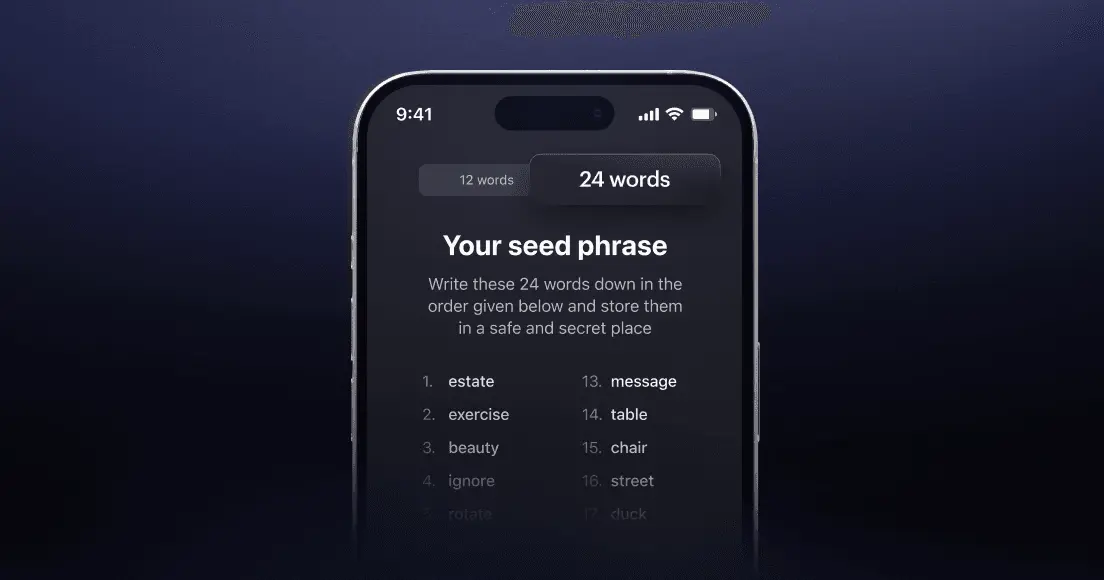
A hardware wallet is supposed to keep your private keys offline and out of reach. The Ledger CryptoBilis incident raises a harder question: what happens when the threat enters before the device reaches you?
Here's what the evidence actually shows, what remains unresolved, and what steps are proportionate given the current scope of confirmed information.
What is confirmed and what remains uncertain
Confirmed facts, with dates and sources:
On October 9, 2026, Ledger opened an investigation into reported cryptocurrency drains involving devices sold through CryptoBilis, a Southeast Asian reseller of Ledger hardware wallets. (source: x.com/Ledger, October 9, 2026)
On October 10, 2026, Ledger confirmed that one affected device contained an unauthorized hardware implant. (source: x.com/Ledger, October 10, 2026)
- On October 13, 2026, Ledger stated that the implant could read recovery phrases displayed during setup and transmit them over LTE. Ledger had not confirmed, as of that date, when or how the devices were modified. (source: x.com/Ledger, October 13, 2026)
Ledger confirmed that all losses tied to the disclosed incident involved CryptoBilis-sold devices.
What remains unconfirmed:
The number of affected people, the total value lost, and whether any devices sold outside CryptoBilis are involved all remain unconfirmed. Ledger said it had not verified drains involving devices bought elsewhere and was reviewing reports from other locations. (source: x.com/Ledger)
How to read this: the confirmed scope is narrow. One implanted device is documented. The investigation was open as of October 13, 2026, and the situation may change. Do not treat the confirmed facts as applying to all Ledger devices or all resellers.
This incident is separate from the two previously documented Ledger security events: the July 2020 e-commerce database breach (approximately 272,000 customer records with names, addresses, and phone numbers, plus more than 1 million email addresses) and the December 14, 2023 Connect Kit exploit, in which phishing of a former employee's NPMJS account led to malicious packages that drained wallets for roughly five hours before resolution. Each event had a different attack surface, a different scope, and different remediation steps.
Compare the actual attack surface
Not every attack on a crypto user targets the same layer. A 12- or 24-word recovery phrase is one layer, while the secure element and companion app are others. Understanding which layer was compromised changes what you should do next.
A hardware wallet generates a key pair inside a secure element, keeps the private key on the chip, signs transaction data internally, and returns only the signed transaction to the companion app for broadcast. Its separate 12- or 24-word recovery phrase can regenerate the associated keys. The private key does not touch an internet-connected device during that flow.
The CryptoBilis incident, as confirmed, targets a different layer entirely: supply-chain integrity. An implant that reads a recovery phrase during setup bypasses the secure element's signing protections because it captures the secret before the user ever completes setup. That's a different problem from remote exploit, firmware attack, or phishing.
A seed phrase is a 12- or 24-word backup that can regenerate associated keys. Anyone who possesses it controls the funds. If the implant read and transmitted the recovery phrase over LTE as Ledger reported on October 13, the attacker would hold the keys regardless of how secure the hardware signing process is.
Other attack surfaces remain relevant for any hardware wallet user:
- Phishing targets the user directly, not the device. A convincing fake support site or email can trick someone into entering their recovery phrase.
- Malicious transaction approvals occur when a user signs a transaction they haven't read carefully, often through a compromised or fraudulent dApp.
- Hot-wallet compromise affects users who keep a portion of funds in a software wallet. Hot wallets remain internet-connected, which expands exposure to phishing, malware, and device compromise.
- Physical theft of the device is a separate risk from remote attacks.
Each of these requires a different mitigation. Supply-chain tampering is mitigated at the point of purchase, not at the point of signing.
Comparison table and decision criteria
The table below uses verifiable, published attributes. No scores or rankings are assigned, because security is not a single dimension. Price is not a reliable security indicator: hardware wallets range from $49 to $400, and a higher price does not equal higher security.
| Criterion | Ledger (current range) | Tangem Cold Wallet |
|---|---|---|
| Key generation | On-device secure element | On-chip, Samsung S3D350A (CC EAL6+) |
| Secure element certification | CC EAL6+ (four current models), CC EAL5+ (Nano X) | CC EAL6+ |
| Connection method | USB-C; Bluetooth on Stax, Flex, Nano Gen5, Nano X | NFC only (0-5 cm range), no USB, no Bluetooth |
| Firmware updates | User-updatable; Ledger recommends keeping firmware current | Factory-installed, non-updatable |
| Recovery model | 24-word seed phrase (mandatory); Ledger Recover and Recovery Key are optional | Seedless by default (multi-card backup); BIP39 seed phrase optional |
| Screen | E Ink touchscreen (Stax, Flex, Nano Gen5) or OLED (Nano X, Nano S Plus) | No screen |
| Supply-chain check | Standard retail and reseller channels | App verifies card authenticity and warns if card was activated before setup |
| Price range (US, 2026-09-27) | $59 (Nano S Plus) to $399 (Stax + Recovery Key) | Sold in sets; see tangem.com for current pricing |
| Open-source status | Ledger Wallet fully open source; Ledger OS partially reviewable | Firmware audited by Kudelski Security (2018), Riscure (2023), and Cure53 (2026); not community-verifiable |
Methodology note: Claims about the CryptoBilis incident reflect the confirmed scope as of October 13, 2026. The investigation was ongoing at that date.
Practical implications for current users
If you bought a Ledger device through CryptoBilis, the proportionate response is to treat your recovery phrase as potentially compromised and to move funds to a wallet whose keys were generated on a device you trust. Do not follow unsolicited recovery instructions from anyone claiming to represent Ledger or CryptoBilis. Check Ledger's official channels directly.
If you bought a Ledger device through a different channel, the confirmed scope of this incident does not extend to your device. That doesn't mean you should be complacent. It means you should not panic-transfer funds based on unverified reports.
Self-custody shifts responsibility to you: losing the private key or seed phrase leaves no recovery process.
Practical steps that apply regardless of this incident:
- Never store your seed phrase digitally, including in cloud storage or phone photos. Keep physical backups in at least two separate locations on durable media.
- Test recovery before storing large amounts.
- Keep wallet software, operating systems, and browsers updated. Verify website addresses before entering credentials.
- Separate a small spending balance in a hot wallet from longer-term holdings in cold storage. A hot-wallet compromise then affects only the spending balance.
How Tangem's Design Reduces Specific Attack Vectors
Tangem Cold Wallet takes a different set of design trade-offs, and some of those trade-offs are directly relevant to the CryptoBilis incident's attack pattern.
The most relevant difference is the seedless-by-default setup. Tangem's default hardware configuration generates a private key on the Samsung S3D350A secure element (CC EAL6+), stores it in tamper-resistant memory, and never exports it. No recovery phrase is displayed during setup unless the user explicitly opts into BIP39 mode. That removes the specific exposure path the CryptoBilis implant reportedly exploited: there is no phrase to intercept if no phrase is generated.
The app also performs a cryptographic authenticity check and warns if a card appears to have been activated before setup, which functions as a supply-chain tamper indicator. The card has no USB port, no Bluetooth radio, no battery, and no screen. The firmware is factory-installed and non-updatable, which removes remote firmware-update vectors. The NFC link operates at 0-5 cm range over an AES-256 encrypted channel.
These design choices reduce specific attack vectors. They do not eliminate all risk.
Phishing still works against Tangem users. A malicious approval on a dApp still moves funds if the user signs it. If all cards in a set are lost and no seed phrase was created, the funds are permanently inaccessible. The firmware has been audited by Kudelski Security (2018), Riscure (2023), and Cure53 (2026), but it is not community-verifiable because the source is not public.
No wallet is unhackable. The question is which attack surfaces matter most for your situation.
Поширені запитання
-
Compare key generation and storage, transaction-signing path, recovery design, supply-chain controls, update process, supported assets, and independent security evidence. A 12- or 24-word recovery phrase is a separate risk surface from the signing device. Do not rank a device on features or marketing claims alone. The CryptoBilis incident illustrates why supply-chain controls and recovery design deserve as much weight as secure-element certification.
-
No. Separate confirmed facts from allegations, identify which products or buyers are affected, and rely on dated statements and evidence rather than extrapolating beyond the known scope. As of October 13, 2026, Ledger confirmed that all documented losses involved CryptoBilis-sold devices. Devices purchased through other channels were not confirmed as affected.
-
Avoid panic transfers and do not follow unsolicited recovery instructions. Check official notices directly from Ledger's website or verified social accounts, preserve any evidence of unusual activity, and make changes only after understanding whether the report affects your specific device or recovery material. For this incident, Ledger's October 13 statement is a dated reference point for the confirmed scope.
-
If the device came from CryptoBilis, treat the phrase as potentially compromised. Ledger said on October 13 that an implant could read a recovery phrase during setup and transmit it over LTE. Preserve the device, proof of purchase, and transaction records. Then move funds to a wallet whose keys were generated on a device you trust.
-
If all cards in a Tangem two- or three-card set are lost and no BIP39 seed phrase was created during setup, the funds are permanently inaccessible. There is no central recovery process. This is the direct trade-off of the seedless model: it removes seed-phrase exposure as an attack surface but places the full recovery burden on physical card retention.
-
No. Tangem's firmware is factory-installed and non-updatable. It has been audited by Kudelski Security in 2018 and by Riscure in 2023, but the source code is not publicly available for community review. Users who require open-source firmware should factor this into their decision.