Переходьте на seedless. Знижка 30% з SWITCH30 до 21 жовт.
Hardware Wallet Security: Reduce Reseller Risk
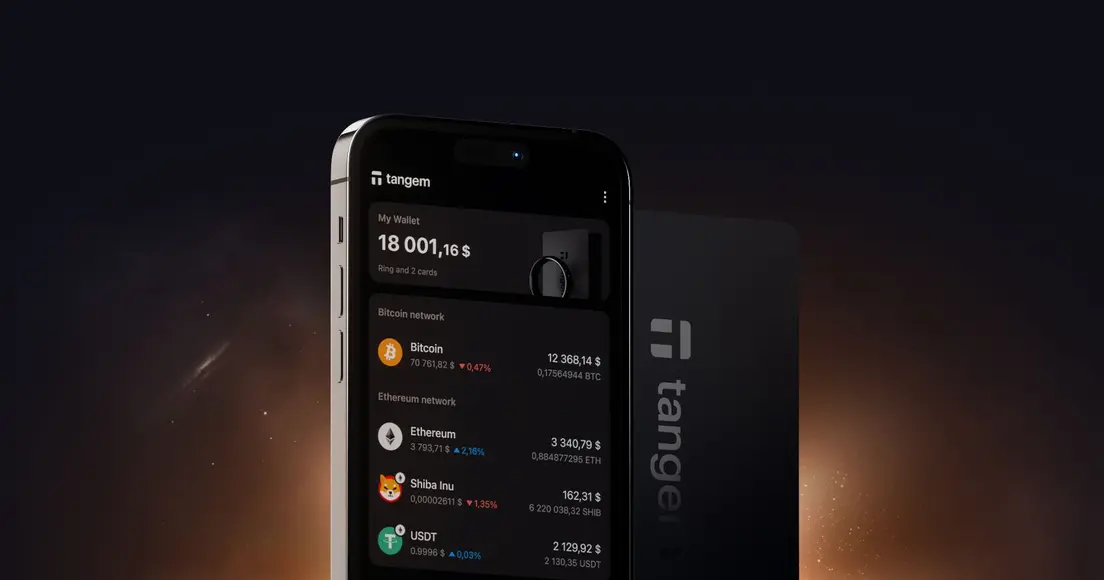
You've decided to move crypto off an exchange and into self-custody. Good call. But then a question surfaces that most beginner guides skip: what if the hardware wallet itself has been tampered with before it reaches you?
Buy directly from the manufacturer, inspect for altered packaging or prior initialization, and initialize the wallet yourself with official software.
Understand the Threat Model
Self-custody means you control the private keys and sign transactions locally. That removes a third party from key control. It also moves security responsibility entirely to you.
A hardware wallet generates and stores private keys offline, signs transaction data internally, and returns only the signed transaction to your internet-connected device. The private key never touches an online environment. That's the core security property. It only protects against one category of risk.
Here's the full threat map:
| Threat category | What it targets | Does offline key storage help? |
|---|---|---|
| Supply-chain / reseller tampering | Device integrity before you receive it | Partially (see controls) |
| Phishing and malicious approvals | Transaction approval after setup | No |
| Malware on your device | Clipboard, keystrokes, stored keys | Partially (keys stay off device) |
| Recovery-material exposure | Seed phrase written down or stored digitally | No |
| Physical access (loss or theft) | The device itself | Partially (access codes help) |
| Human error | Wrong address, wrong network, confirmed wrong transaction | No |
Crypto users lost $410.75 million to phishing attacks in the first half of 2025 alone. A hardware wallet does not prevent a single dollar of that if you approve a draining transaction on a malicious site.
The honest starting point is not "is this wallet safe?" It's: which of these threat categories can I manage responsibly?
How the Attack Path Works
Each threat category has a distinct mechanism. Understanding the mechanism tells you which control actually addresses it.
Supply-chain attacks work by compromising a supplier, reseller account, manufacturer, build system, firmware, or distribution channel, then substituting or modifying a legitimate wallet before it reaches the buyer. The tampered product may arrive through a trusted reseller or normal delivery. Malicious firmware can retain legitimate-looking signatures and appear authentic during installation. Warning signs include broken or altered packaging, unexpected seals or labels, a wallet that was already initialized when you received it, an unfamiliar recovery phrase or PIN prompt, and firmware behavior inconsistent with official release notes.
The cold-storage signing path itself is straightforward: you prepare a transaction on an internet-connected device, sign it offline on the hardware wallet, then broadcast only the signed transaction. The private key doesn't need to touch the internet at any point.
Phishing breaks that model at the approval step. A convincing link leads you to a malicious site; you connect your wallet and approve a transaction that drains funds. The keys stayed offline. The approval didn't.
Malware on a general-purpose device can log keystrokes, capture clipboard contents, or access locally stored wallet files. A hardware wallet reduces this exposure because the private key never lives on the infected device, but malware can still manipulate what address you're sending to.
Recovery-material exposure is its own attack path. A seed phrase (12 or 24 words) can regenerate all associated keys. Anyone who has it controls the funds, regardless of whether the hardware wallet is physically secure. A single backup in one location is a single point of failure against loss, fire, flood, or theft.
Human error is final. Blockchain transactions are irreversible once confirmed. Sending to a wrong address, confirming a wrong transaction, or using an incompatible network can't be undone.
Controls That Reduce Exposure
Here's how to address each risk category in a practical order.
Before you buy: Purchase directly from the manufacturer, not a secondary marketplace. This is the single most reliable way to reduce supply-chain risk. Check that packaging is intact, seals haven't been disturbed, and the device hasn't been initialized before you set it up.
When evaluating a device, look for:
- A secure element with an independent certification. CC EAL5+ or CC EAL6+ certification is a meaningful benchmark. It indicates the chip has been tested against physical and side-channel attacks.
- Non-extractable keys: the private key should be generated and stored inside the secure element, never exposed externally.
- Independent firmware audits: open-source app code and published third-party security audits are verifiable signals.
- Access code or biometric protection: if the device is lost or stolen, a PIN or passphrase limits what an attacker can do with it.
During setup: Initialize the device yourself, on a clean device, using software downloaded from the manufacturer's official site. Don't use a wallet that arrives pre-initialized with a seed phrase already written on a card. That seed phrase is already compromised.
Test the backup before committing funds. Move a small amount, complete a send-and-receive cycle, verify the backup restores access, then transfer the rest. Discovering a backup problem after storing significant funds is not recoverable.
Ongoing use: Keep operating systems and wallet applications updated. Avoid unverified browser extensions. Treat the device you use for wallet access as security-sensitive.
Separate funds by purpose. Keep active funds in a hot wallet or exchange and long-term holdings in cold storage. A compromise of the active wallet doesn't affect the savings allocation.
For recovery material: don't store seed phrases in cloud storage, don't photograph them, and don't enter them into any app or website that isn't your wallet's official restore flow. Multiple secure physical locations reduce single-point-of-failure risk.
Price is not a reliable proxy for security. The hardware wallet market spans roughly $49 to $400, and simpler devices can have fewer components and therefore fewer attack surfaces.
Limits and Trade-offs
A hardware wallet reduces online key-exposure risk. It doesn't remove the need to evaluate transaction approvals, protect recovery material, or guard against physical loss.
Self-custody has no password reset. There's no support team that can recover your funds if private keys or seed phrases are lost. An estimated 2.3 to 3.7 million Bitcoin was permanently inaccessible as of early 2025, much of it attributed to forgotten passwords and lost seed phrases.
A seedless backup model removes the human-readable seed phrase but trades cross-vendor recovery for reliance on the wallet's physical backup mechanism. Losing all physical backup cards without a seed phrase makes funds permanently inaccessible.
Hardware wallets also trade some convenience for security. Air-gapped options are more complex and less practical for frequent transactions. The typical cost range is $50 to $200+.
When to seek expert help: If a device appears compromised, stop signing and disconnect the device from the suspicious host. Use a clean device with official software. Contact support through a vendor URL you navigate to independently. If recovery material may have been exposed, create a new wallet with a freshly generated seed on trusted hardware. Move remaining assets. Don't enter the old seed into unfamiliar software.
Seek independently verified incident-response or digital-forensics help when unauthorized access to sensitive systems, confirmed data exfiltration, or unknown compromise scope is involved. Legitimate support never needs your seed phrase or private key. Possession of either is sufficient to control all associated funds.
How Tangem's Design Reduces Specific Attack Vectors
Tangem Cold Wallet is a self-custodial hardware wallet built as a credit-card-sized NFC device. Several design choices directly address the threat categories above. No wallet eliminates every risk.
The card has no USB port, no Bluetooth radio, no battery, and no screen. That removes the attack surfaces associated with USB firmware injection, wireless interception, and screen-scraping. The secure element is the Samsung S3D350A, certified at Common Criteria EAL6+. Private keys are generated entirely within the secure element using a DRAM-based true random number generator, stored in tamper-resistant memory, and signing happens on-chip. The key never touches the phone.
NFC communication uses an AES-256-encrypted channel with a 0-5 cm range. Physical proximity is required for every transaction. A stolen card alone isn't sufficient: use also requires the Tangem app, the app access code or biometric, and physical proximity.
Tangem's firmware is factory-installed and non-updatable. This eliminates remote exploit vectors that depend on malicious firmware updates, one of the supply-chain attack mechanisms described above. Before any operation, the Tangem app verifies card authenticity and warns if a card appears to have been activated before setup. That's a direct countermeasure to the pre-initialized-device warning sign.
The default seedless setup generates keys on-card with no seed phrase required or stored. This removes the recovery-phrase exposure path entirely. The trade-off is real: if all cards are lost or destroyed without a seed phrase backup, funds are permanently inaccessible. The product documentation strongly recommends at least two cards, with three providing maximum redundancy, stored in separate physical locations.
The optional seed-phrase route supports BIP39 phrases of 12, 15, 18, 21, or 24 words. Using a seed phrase reintroduces its own exposure risk, the same one described in the threat model above.
The Tangem app is open source on GitHub for iOS and Android. Documented independent security audits include Kudelski Security in 2018, Riscure in 2023, and Cure53 in 2026. For dApp interactions via WalletConnect, the app includes Blockaid-powered dApp verification, transaction simulation with a human-readable preview, and Verified Transactions (VTX) intended to ensure the preview matches execution.
Phishing, malicious approvals, user error, and physical loss remain user-facing risks regardless of these design choices.
Поширені запитання
-
No. A hardware wallet keeps private keys off an internet-connected device, which reduces exposure to malware and remote key theft. But it can't prevent phishing, malicious transaction approvals, unsafe recovery backups, coercion, or every supply-chain and physical attack. The risks that remain are entirely user-facing: what you approve, how you store recovery material, and how you physically protect the device.
-
Map what you're protecting, how you use it, and the realistic ways an attacker could reach your keys, recovery material, or transaction approval. Then apply controls to the highest-impact paths.
-
Don't initialize it or transfer funds through it. Treat altered packaging as a warning sign and contact the seller through an independently verified channel before deciding whether to return it.
-
Funds become permanently inaccessible. There's no recovery mechanism without either a remaining card from the wallet set or the original seed phrase. This is why the product documentation recommends storing at least two cards in separate physical locations, with an optional third held by a trusted person or in a safety deposit box.
-
Seek trusted, independently verified help when assets may be actively at risk or a device appears compromised. Never share a seed phrase or private key with support staff or anyone offering recovery.