



How Does a Crypto Exchange Hack Affect Cold Wallet Users?
Ця стаття доступна такими мовами:
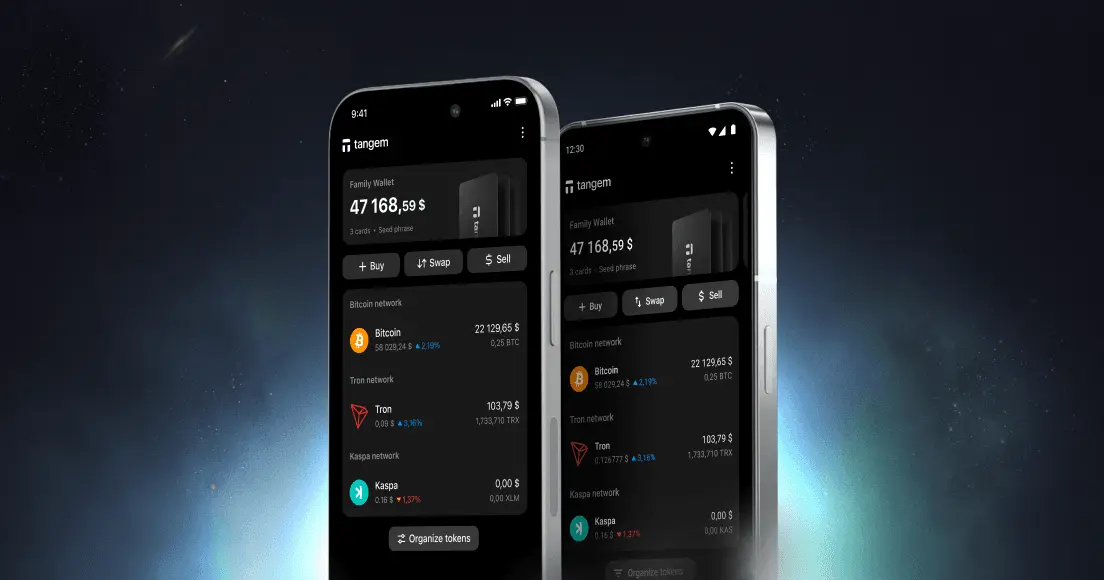
Centralized exchanges (CEXs) have been the go-to platforms for buying, selling, and trading cryptocurrencies. However, because these exchanges hold onto users’ funds and private keys, they often become targets for hackers.
Notable security breaches at exchanges like Mt. Gox, ByBit, KuCoin, and BitMart have underscored the dangers of relying on these custodial wallets and services to manage your crypto investments.
We've always advocated for moving your funds to cold, self-custodial wallets—not because we are a cold wallet, but because it is the right thing to do. Learn more about moving your Bitcoin and other crypto assets from exchanges.
This raises an important question: How does an exchange getting hacked or going bankrupt affect cold wallet users?
No direct exposure
Exchange breaches cannot directly impact Tangem users who exclusively store their assets on Tangem hardware wallets. Tangem is a non-custodial wallet, meaning:
- Private keys never leave the card and are never stored on centralized servers.
- Users retain full control over their funds at all times.
- There is no dependency on any centralized exchange to hold, manage, or safeguard user funds.
Therefore, if a CEX is hacked, only the funds held within that exchange are at risk, not your assets stored securely in your Tangem.
Indirect consequences
While Tangem users are shielded from direct theft, exchange breaches can still have indirect consequences:
Market Volatility
Exchange hacks often trigger panic selling, leading to significant market drops. Tangem users might see the fiat value of their holdings decline, even though the assets remain safe.
In February 2025, Bybit exchange was hacked, leading to a loss of $1.5 billion. This event caused the global cryptocurrency market to drop by 19.27% in just a week, decreasing its value from $3.27 trillion to $2.64 trillion.On-Ramp and Off-Ramp Disruption
If a user depends on a specific exchange to trade crypto, a breach could interrupt their access to cash, temporarily making it harder to convert between fiat currency and crypto.
Why cold wallets are resilient
Tangem’s architecture inherently mitigates many of the risks associated with centralized infrastructure:
- Cold storage by default: Funds remain offline and out of reach of hackers.
- No account linking: Tangem does not require users to register accounts, minimizing data exposure.
Conclusion
Tangem users have better security than those who only use centralized exchanges. If an exchange is hacked, it can create market instability, but assets in a Tangem wallet stay safe and separate. This reflects an important idea in Web3: "If you don’t control your keys, you don’t control your coins." With Tangem, users control their keys and gain real financial independence.
Exchange hacks and cold wallets: FAQ
-
No. Exchange breaches cannot directly impact assets stored on a hardware wallet like Tangem: private keys never leave the card and are never stored on centralized servers, and there is no dependency on any exchange to hold or safeguard the funds. Only funds held within the hacked exchange are at risk.
-
Indirectly, yes. Hacks often trigger panic selling: when Bybit was hacked in February 2025 with a $1.5 billion loss, the global crypto market dropped 19.27% in a week, from $3.27 trillion to $2.64 trillion. The fiat value of your holdings can fall even though the assets themselves remain safe.
-
It can disrupt on-ramps and off-ramps: if you rely on a specific exchange to convert between fiat and crypto, a breach may temporarily interrupt that route. The assets in your cold wallet stay accessible, but converting them to cash may require a different platform for a while.
-
Funds remain offline by default and out of hackers' reach, and Tangem requires no account registration, which minimizes data exposure. It reflects the core Web3 principle: if you don't control your keys, you don't control your coins.


Не пропустіть 

Інші статті

