


Where to Buy Anthropic Tokenized Stock in 2026
Where can you buy Anthropic tokenized stock?
There are three practical routes: a centralized distributor, an on-chain swap from a self-custody wallet, or direct minting with an issuer. Each route makes a different trade-off between identity checks, minimums, access, and trading hours.
Anthropic filed its Form S-1 with the SEC on 26 October 2026. It says the company has applied to list Class A common stock on Nasdaq under the symbol ANT. That is an application, not an approved listing. The registration statement is not effective, and no listing date has been announced.
A tokenized stock token is not a share. It carries no shareholder rights and comes from a third-party issuer, rather than Anthropic.
xStocks appends a lowercase x to an underlying symbol, as in TSLAx. Ondo Stocks appends on, as in TSLAon. ANTx and ANTon follow those naming conventions, but neither provider has announced a tokenized listing for Anthropic. Verify the contract address on an issuer product page before you buy.
| Route | Example venue | Identity check | Minimum | Who is excluded | Hours |
|---|---|---|---|---|---|
| Centralised distributor | Kraken, which distributes xStocks | Account KYC | No retail minimum published | US, Canada, UK, and Australia | Ten xStocks on Kraken Pro trade 24/7; the rest trade 24/5 |
| On-chain swap | Tangem Wallet Real assets tab | None at token level | No minimum published | Restricted regions include the US and UK | Decentralised exchange trading is 24/7 |
| Minting with xStocks issuer | Backed Assets (JE) Limited | KYC/AML and wallet whitelisting | $5,000 retail redemption | US Persons | Issuance and redemption run 24/5 on US market days |
| Ondo Stocks platform | Ondo Global Markets (BVI) Limited | KYC or KYB and wallet approval | $1 to invest or redeem | US and Canada; extra professional-status rules apply elsewhere | Sunday 20:05 ET to Friday 19:59 ET |
The table provides the route, not a guarantee that a specific Anthropic token exists. For any tokenized stock, confirm the listing, contract, and eligibility before sending funds.
What does a centralized distributor require?
An account, the distributor's KYC, and a country on its eligible list. That's the short version.
Kraken distributes xStocks to eligible non-US clients in more than 110 countries. Its listed distribution excludes the United States, Canada, the United Kingdom, and Australia. The purchase price includes the market price plus a 1.0% spread. Converting xStocks carries a fixed 1% fee.
Custody is part of the choice. Kraken's FAQ lists Alpaca Securities LLC as its primary custodian and InCore Bank as its secondary custodian. It also describes Lloyd's cover of up to $175 million in aggregate. Backed's own documents do not name a custodian.
Payward announced tokenized IPO access on 3 June 2026. Buyers could register non-binding interest before a listing, then receive allocations on listing day. The service charged a 5% xStocks fee. Its OURAx offering was withdrawn after Oura postponed its IPO, and reserved funds were returned.
Here's the honest issue with the centralized route: you hand custody of the token to the platform. Custodial models can offer account recovery and a simpler interface, but they expose you to the platform's hack, insolvency, regulatory freeze, or exit-fraud risk.
How does buying through a self-custody wallet work?
You swap a stablecoin for the token on-chain and keep the token yourself. No account, no identity check at the token level.
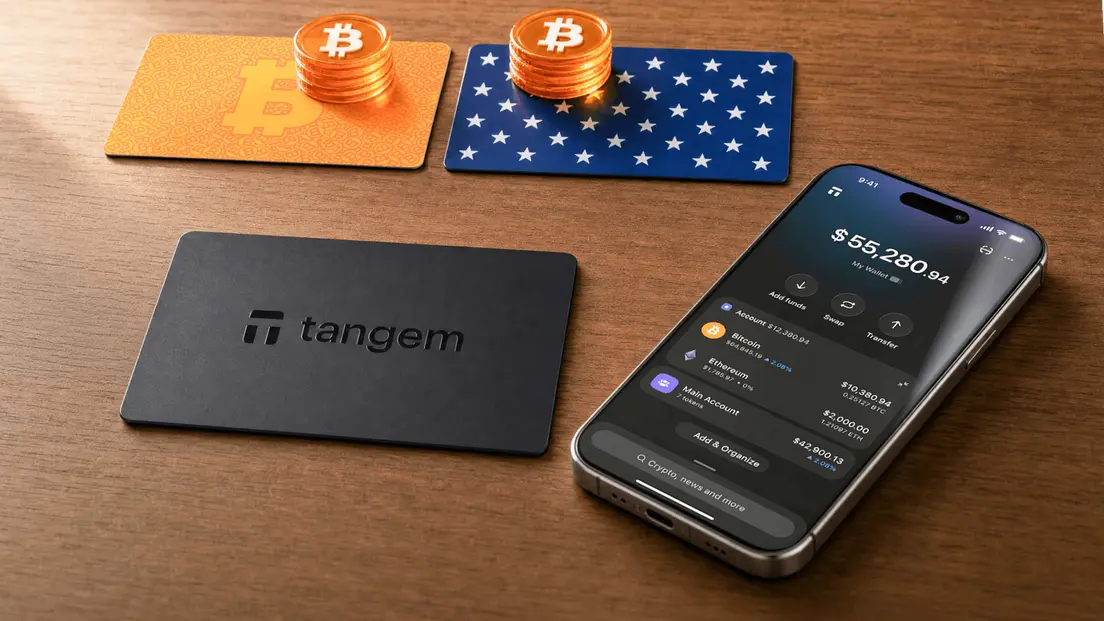
Tangem Wallet's Market section has a Real assets tab holding tokens that, in Tangem's words, track "stocks, ETFs, gold, bonds, and other traditional assets." Category filters are labeled Stocks, ETFs, Commodities, Bonds, and Stablecoins. In Tangem, you can swap them and hold them in your wallet "like any other token." These assets are issued by third parties. It does not issue or manage them, and it is not regulated as a financial services provider or cryptocurrency exchange. The issuer, not Tangem, sets token availability and investor conditions.
When can you trade at each venue?
On-chain, a token can move at any hour. Its price only tracks the share reliably while the underlying US market is open.
xStocks issuance and redemption run 24/5 on US market days. Secondary trading on decentralized exchanges runs 24/7. On Kraken Pro, ten xStocks trade 24/7 and the rest trade 24/5. Kraken says divergence has historically been under 1% at Monday open.
Ondo Stocks sessions run from Sunday 20:05 ET to Friday 19:59 ET. They cover pre-market, core, post-market, and overnight activity on the Blue Ocean ATS. Trading halts outside those hours unless an asset supports off-hours trading. Tokens can still transfer 24/7, while off-hours spreads can widen.
US stocks trade during regular NYSE and Nasdaq hours of 9:30 a.m. to 4:00 p.m. Eastern Time on weekdays. Outside those hours, tokenized-stock prices can diverge because the underlying market is closed, liquidity is thinner, and market makers cannot hedge normally.
What does each route cost, and what are the shared risks?
Kraken includes a 1.0% spread in the purchase price and charges a fixed 1% xStocks conversion fee. Its IPO access product charges a 5% xStocks fee. Backed does not publish issuer-level mint, redemption, or management fees.
Ondo publishes no mint or burn fees. It earns the spread between its quote and execution price. The investor pays gas, and Ondo does not disclose a management fee. A missing fee is not the same as a zero fee.
Tokenized-stock markets can split liquidity across multiple tokenized versions of the same share. They also carry issuer, redemption-term, liquidity, regulatory, fraud, hacking, and malicious-contract risk. Ondo instruments have no deposit or investor compensation cover.
Self-custody protects control of the private key. It does not remove issuer, redemption-term, liquidity, regulatory, or malicious-contract risk for a tokenized-equity position.
This comparison describes venues, requirements, and costs. It is not investment advice.
คำถามที่พบบ่อย
-
A centralised distributor controls the private keys, while self-custody means you control them. Custodial models can offer account recovery and a simpler interface, while self-custody transfers responsibility for the private key to you.
-
Tokenized stock exposure is distinct from buying shares through a traditional brokerage. It can be held in a self-custody wallet, but the issuer's obligations and the holder's jurisdictional eligibility still apply.
-
Tokenized real-world assets face different regulatory requirements across jurisdictions. In the Tangem app, tokenized assets cannot be bought or swapped in some regions, including the United Kingdom; check the current terms of any venue for your location.
-
In Tangem, users can add an unlisted token manually with its contract address, specifying its name, symbol, and decimals, with custom-token price data potentially unavailable. However, Tangem's help center also states that unsupported networks or tokens cannot be transferred to the wallet. Adding a token by contract address does not change issuer-level eligibility restrictions: if your region is restricted, the issuer's terms still apply regardless of whether the token appears in your wallet.

อย่าพลาดสิ่งเหล่านี้ 


บทความอื่นๆ

