Why Your Seed Phrase Is Your Biggest Security Risk in 2026

Post image


As of early 2025, an estimated 2.3 to 3.7 million Bitcoins were permanently inaccessible, with forgotten passwords and lost seed phrases named as major causes. That's not a rounding error. That's wealth that cannot be recovered by anyone, ever. And in most of those cases, the funds weren't stolen from a wallet. They were lost because the backup system itself failed. That backup system is the seed phrase.

What Is a Seed Phrase and Why Does It Exist?

A seed phrase (also called a recovery phrase or mnemonic) is a sequence of 12 or 24 words generated by a crypto wallet during setup. It's a human-readable representation of the wallet's private key. If your wallet is lost or damaged, you enter those words into a new wallet and regain full access to your funds.


The standard comes from BIP39, which converts a random number into common dictionary words, then uses those words to deterministically generate private and public keys for supported blockchains. The logic was sound: instead of backing up a raw hex string, users could write down recognizable words.


Here's the honest issue. That design placed an enormous security burden on ordinary people. The seed phrase is the master key. Anyone who has it controls the funds, completely and immediately, with no appeal process and no recovery option. A 2025 CHI Conference study found that only 43.4% of surveyed crypto users could correctly identify what a seed phrase is. More than half of the people holding crypto with a seed phrase don't fully understand what they're holding.

The 6 Ways Seed Phrases Get Stolen or Lost

The threat model is wider than most people realize. It's not just hackers. It's the full range of ways a human-readable secret on paper can fail.

  1. Physical theft. A piece of paper in a home safe is a target during a burglary. House fires, floods, and moving accidents regularly destroy seed phrase backups. Some people keep them in phone notes or cloud storage, where anyone who compromises the account gains instant access.


  2. Phishing attacks. This is the most documented attack vector. Fake wallet recovery websites ask users to enter their seed phrase to "restore access." The U.S. Federal Trade Commission warned in May 2023 about fake MetaMask emails claiming wallets were blocked and directing users to phishing sites designed to harvest recovery phrases. No real wallet, exchange, or support team will ever ask for a seed phrase.


  3. Malware and clipboard attacks. Infected devices can capture keystrokes, monitor clipboard data, or scan for BIP39 word patterns. If you copy-paste your seed phrase even once, it can be captured before you paste it anywhere.


  4. Human error. One wrong word, one incorrect word order, illegible handwriting, water damage. A single mistake in 12 or 24 words makes the phrase unusable. These errors have caused permanent loss of funds with no path to recovery.


  5. Social engineering. "Crypto support" impersonators on Discord and Telegram routinely convince users to share seed phrases under the guise of wallet recovery assistance. Kaspersky documented a scam where attackers posted seed phrases in YouTube comments to lure victims into a multisig trap. The manipulation works because people don't understand that sharing the phrase transfers complete control.


  6. Inheritance failure. The account holder dies. The seed phrase isn't found, isn't accessible, or isn't usable by heirs. Crypto inheritance planning requires heirs to locate access credentials, including private keys, seed phrases, and hardware wallets, and there is no central authority to assist if those credentials are missing.

Each of these failure modes is independent. You can protect against one and still be exposed to the others.

Why "Store It Safely" Is Not a Solution

The standard advice is: write it down and store it safely. The problem is that no single location is simultaneously fireproof, flood-proof, burglary-proof, accessible to heirs, inaccessible to hackers, and guaranteed to remain intact for decades. A seed phrase is a single point of failure. One backup in one location means one fire, one flood, or one theft can permanently eliminate access to everything.


Steel backup products address the durability issue. Paper burns; stamped metal doesn't. But steel doesn't protect against theft, and it doesn't solve the inheritance problem. A thief who finds the metal plate has everything they need.


Multi-location storage reduces the single-point-of-failure risk but adds complexity and new failure points. You now have to manage multiple secrets in multiple locations, verify them periodically, and ensure heirs can find and use them.


Cold storage best practices from security literature include keeping at least two physically separate backups on durable media, testing recovery procedures, storing hardware in a fireproof safe or safety deposit box, and having an inheritance plan. That's a serious operational commitment. Most people aren't equipped to manage it for 20 or 30 years without a mistake.


Here's what the "store it safely" advice never acknowledges: the seed phrase itself is the vulnerability. As long as it exists, it can be found, photographed, copied, or entered into a phishing site. The medium you store it on changes the risk profile, but it doesn't eliminate the risk. Self-custody removes counterparty risk, which is genuinely valuable. But it shifts full responsibility to the user, and there is no recovery process if the private key or seed phrase is lost. That tradeoff is real, and it's permanent.

The Seedless Alternative: How Tangem Eliminates the Risk

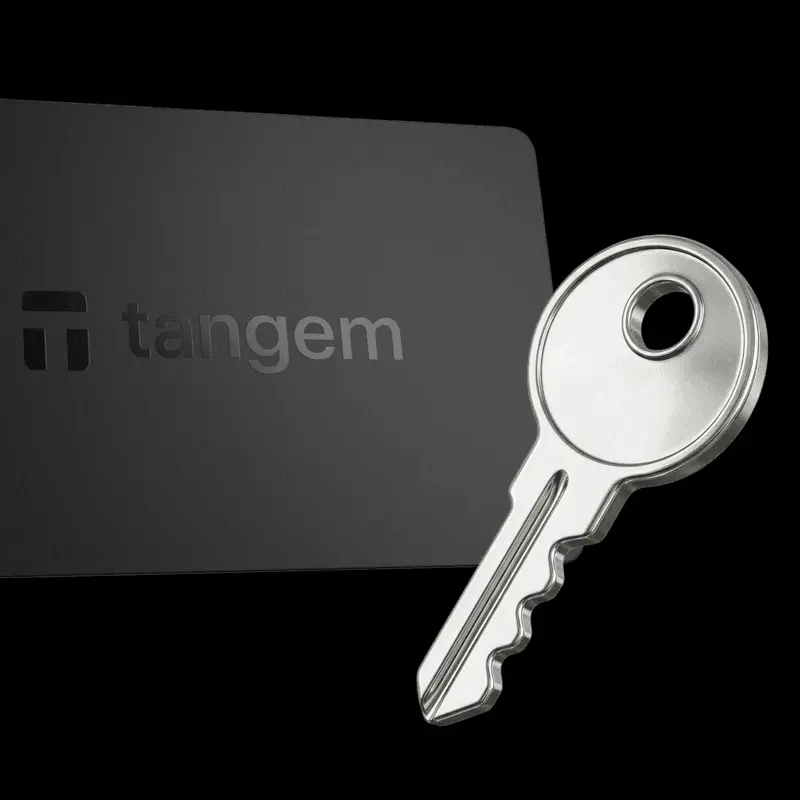
Tangem takes a different architectural approach. It generates no seed phrase by default. The private key is generated by the Samsung S3D350A secure element chip, certified at EAL6+ under the Common Criteria, the same standard used for biometric passports and international payment cards. The key is generated entirely on-chip using a hardware True Random Number Generator, stored inside the secure element, and never exported in any form. Not as a seed phrase, not as a hex string, not as anything.


Here's what that means in practice.

No paper exists to protect. No phrase can be entered on a phishing site. Nothing is ever typed or copied, so clipboard malware has nothing to capture. A person who finds one card still needs the access code to use it, and brute-force attempts trigger increasing delays after failed attempts. Inheritance doesn't require locating a 24-word phrase: heirs need the card and the access code.


The backup model replaces paper with physical redundancy. Each Tangem wallet set includes 2 or 3 cards that share identical access to the same private key. During setup, backup cards establish a secure connection and transfer encrypted private keys between each other, so no seed phrase is required at any point. Lose one card, the other two still work. Tangem recommends storing one card for daily use, one at home in a secure location, and one with a trusted person or in a safety deposit box.


The cards themselves are built for durability. Tangem carries an IP69K dust- and water-resistant rating, ISO 7816-1 compliance for EMP, ESD, and X-ray protection, and operates from -25°C to +50°C. There are no batteries, no cables, no screens to break. Independent audits by Kudelski Security in 2018 and Riscure in 2023 confirmed that no vulnerabilities were found. Over 3 million devices have been distributed with zero successful hacks reported.


There's also no desktop or web interface. Tangem operates through the Tangem Mobile Wallet app on iOS and Android. If you need a browser-based interface for your workflow, that's a real constraint. Tangem supports an optional seed phrase mode for users who want to port their funds to other BIP39-compatible wallets. The seedless default is a choice, not a limitation of the hardware.


One honest limitation: if all backup cards are lost and no seed phrase was generated, fund recovery is impossible. Tangem cannot recover the funds. No one can. This is the tradeoff of the seedless model. The security comes from the fact that no human-readable secrets exist anywhere, but it also means the physical cards are the only path to access. A minimum of 2 cards (and ideally 3) is essential.

Seed Phrase Wallet vs. Tangem

RiskSeed Phrase WalletTangem (Seedless Mode)
Physical theft of backupHigh: paper or metal can be stolen and used immediatelyLow: card requires an access code to use
PhishingHigh: phrase can be entered on fake websitesVery low phrase-disclosure risk: no phrase exists to enter
Fire or floodHigh: paper backup destroyedLow: IP69K rated, no paper backup
Human errorHigh: wrong word or word order = permanent lossLower seed-phrase handling risk: no phrase to memorize or transcribe
InheritanceHigh: heirs must locate and use the phraseLow: card plus access code, no phrase required
Malware captureHigh: clipboard or keylogger risk if phrase is typedVery low seed-phrase capture risk: nothing is ever typed or copied
Loss of all backupsHigh: funds permanently inaccessibleHigh: funds permanently inaccessible

The last row is the same for both models. That symmetry matters. Seedless doesn't mean loss-proof. It means the backup problem shifts from protecting a secret to protecting physical objects, which most people already know how to manage.

A Different Security Model

The seed phrase was designed for a world where software wallets needed a portable, human-readable backup. It solved one problem (backing up complex keys) while creating another (a human-readable master key that anyone can steal, copy, or photograph). Seedless architectures shift the backup from an information security problem around a written secret to a physical redundancy problem. That's a meaningful shift. Most people are better at keeping track of physical objects than at managing cryptographic secrets for decades without making a single mistake.


Protecting a seed phrase is a lifetime project. The seedless model asks for something simpler: keep your cards safe, keep your access code private, and store backups in separate locations. The underlying security, the EAL6+ chip, the non-extractable key, and the audit record handle everything else. A 3-card Tangem set gives you a practical version of that model. Keep one card with you. Store one at home and one with a trusted person or in a safe deposit box. Your seed phrase isn't a safety net. It's a liability. The question is whether you want to manage that liability indefinitely, or use a wallet that never creates it. Tangem is that wallet. Order at tangem.com.

FAQ

  • No. If someone photographs or gains access to a seed phrase, they can steal the crypto immediately and completely. A photo stored in cloud storage, a phone gallery, or any internet-connected device is accessible to anyone who compromises that account. There is no way to "undo" a seed phrase exposure after the fact.

  • Security literature recommends at least two physically separate backups on durable media (stamped metal rather than paper), stored in fireproof locations such as a safe or safety deposit box, tested periodically, and paired with an inheritance plan. Even with all of these measures, the seed phrase remains a single point of failure. A seedless wallet removes the seed phrase from the backup model.

  • Tangem is the primary example of a hardware wallet that operates in a seedless mode by default. The private key is generated on an EAL6+ certified chip, stored entirely on-chip, and never exported. Backup uses physical cards rather than written words. Tangem does support optional seed phrase generation for users who want BIP39 compatibility with other wallets.

  • If all backup cards are lost and no seed phrase was generated, fund recovery is impossible. Tangem cannot recover the funds, and no other entity can. This is why Tangem recommends a minimum of 2 cards and ideally a 3-card set, stored in separate locations. One card for daily use, one at home, one with a trusted person, or in a safety deposit box.

  • The private key never leaves the secure element chip and is never typed, copied, or transmitted in any readable form. Clipboard hijacking and keylogger malware have no surface to attack in the default seedless setup. The signing process happens entirely on-chip: the app creates an unsigned transaction, you tap the card, the chip signs internally, and the app broadcasts the result. The key never touches an internet-connected device at any point.

  • Your funds remain accessible as long as you have your cards and access code. Tangem servers are not involved in crypto operations. Transactions go directly to public blockchain nodes. The private key lives on the chip, not on Tangem's infrastructure. If Tangem ceased to exist tomorrow, the cards would continue to function with any compatible NFC-enabled phone running the open-source app code.

  • Yes. You create a new Tangem wallet, transfer your funds from your existing wallet to the new Tangem address, and then retire your old seed phrase wallet. Tangem also supports importing an existing seed phrase if you want to migrate your existing addresses rather than create new ones.

AI에게 Tangem이 귀하의 필요에 적합한지 물어보세요

AI로 Tangem 지갑을 조사하여 당사의 보안성과 사용성이 귀하의 고유한 사용 사례에 적합한지 알아보세요

Author logo
검토자:Patrick Dike-Ndulue

Senior Editor covering crypto, equities, and technology.