How to Convert Crypto to Cash in 2026: Every Method Explained
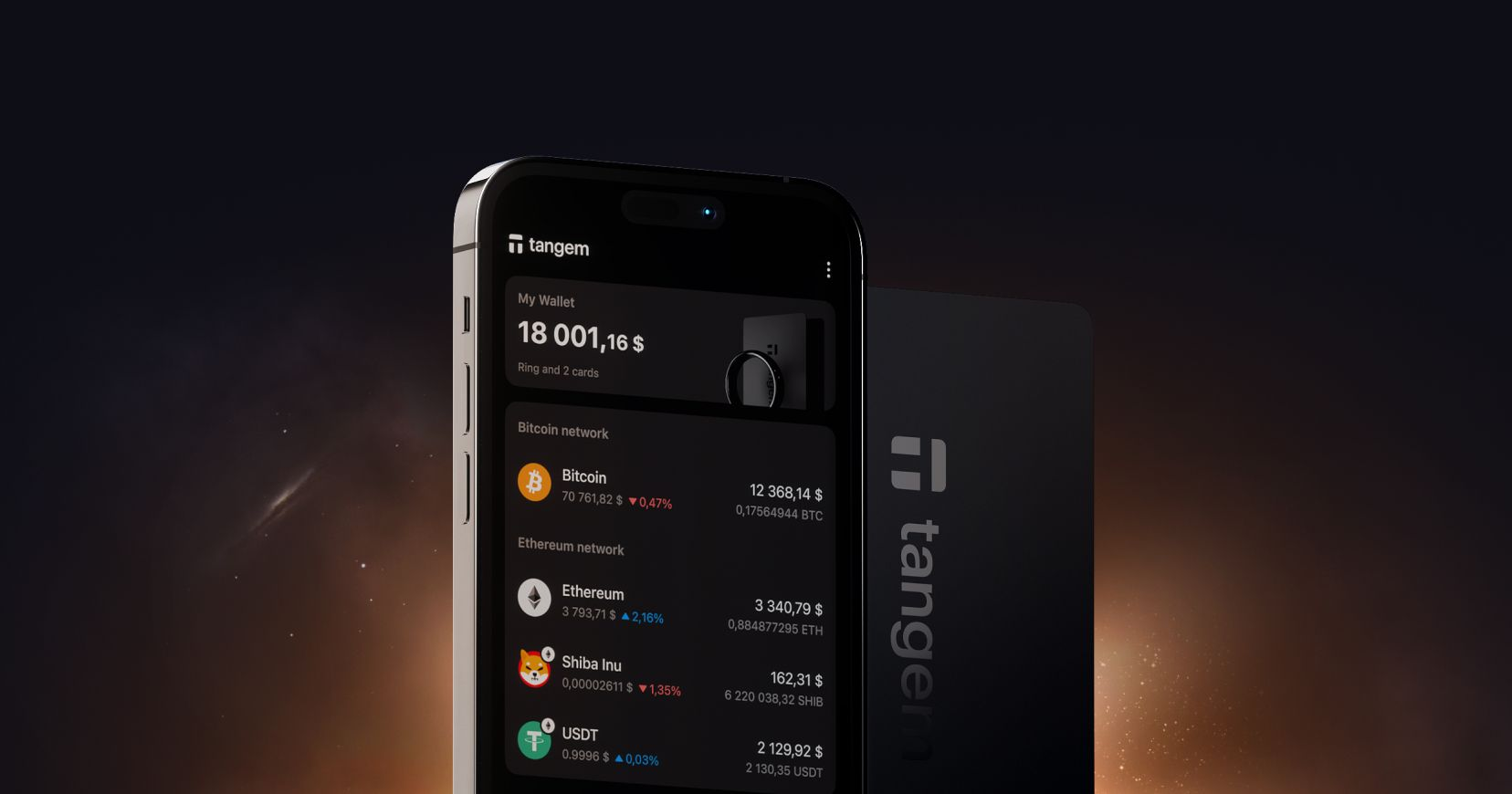
At some point, most crypto holders face the same practical question: how do you actually get your money out? Whether you're a freelancer who was paid in USDT, a long-term holder taking some profits, or someone in Lagos or Manila who uses stablecoins as savings and occasionally needs local currency, the answer depends on where you live and how much you're converting. The short answer is that you'll want your crypto in a self-custody wallet, such as Tangem, before you start, rather than sitting on an exchange.
Even though a centralized exchange may offer the cheapest withdrawal method for large amounts, and P2P platforms are handy when banking options are limited, the only secure long-term storage solution is a cold wallet. Keeping funds in a Tangem hardware wallet until you're ready to convert, then sending them to an exchange or P2P platform solely to withdraw, is the safest setup.
Before You Convert: The Wallet Step
Here's something that doesn't get enough attention in most cash-out guides: if your crypto is sitting on an exchange while you decide when to convert, you're carrying exchange risk for no reason.
Exchanges can freeze withdrawals, they can go insolvent, or they can lock accounts overnight for a vague reason like “abnormal deposit activity”. The smarter move is to hold your crypto in a self-custody wallet and move it to the exchange only when you're ready to sell. With Tangem, the transfer takes about 2 minutes: open the app, tap the card to your phone, enter the exchange deposit address, and confirm. Your crypto was in hardware-secured self-custody right up until the moment of conversion; after that, it's the exchange's problem, not yours.
The same principle applies on the way back out. If you convert and then want to hold some of the proceeds in stablecoins, moving them straight to a non-custodial wallet rather than leaving them on the exchange is the cleaner option. Understanding what a non-custodial wallet is matters here; see this primer if you're new to the concept.
All Methods for Converting Crypto to Cash
Method | Speed | Fees | KYC Required | Regional Availability | Best For |
|---|---|---|---|---|---|
Centralized Exchange (Binance, Coinbase, Kraken) | 1–5 days to the bank | 0.1–1% + wire fee | Yes (full KYC) | Most countries | Large amounts, cheapest overall |
P2P Platform (Binance P2P, OKX P2P, Bybit P2P) | Minutes to hours | 0–2% | Varies | Global, strong in emerging markets | LatAm, Africa, Asia; cash options |
Crypto ATM | Immediate | 8–20%+ | Sometimes | Urban US/Europe, uneven globally | Small amounts, instant cash |
Crypto Debit Card (Bybit Card, Wirex) | Real-time spending | 1–3% conversion | Yes | Limited countries | Regular daily spending |
OTC Desk | Same-day to T+1 | 0.1–0.5% | Yes (institutional) | Major financial centers | Large amounts ($10K+) |
In-person P2P Cash Trade | Immediate | 2–5% | No | Emerging markets primarily | No bank account required |
Method 1: Exchange Withdrawal
This is the most straightforward route for anyone with a bank account and a verified exchange account. The steps are simple enough:
- Send your crypto from your Tangem wallet to your exchange deposit address.
- Sell on the exchange using a market or limit order.
- Withdraw the proceeds to your bank account.
- Wait for the bank transfer to clear: typically 1–3 business days in the US and Europe, up to 5 days in some other regions.
For fees, you're looking at a trading fee of roughly 0.1–0.5% on the sale, plus a withdrawal fee that varies by exchange and country. Binance charges around $15 for international wire transfers; Coinbase varies by region. For USDT or USDC, this is generally the lowest-cost method available for amounts over a few hundred dollars, since stablecoins don't carry spread risk during conversion.
Before you start, check the exchange’s bank withdrawal limits. Some exchanges have daily or monthly fiat withdrawal caps, which can matter if you're cashing out a large amount quickly.
Method 2: P2P Trading
P2P platforms connect crypto sellers directly with buyers who pay via local payment methods. You set the price, choose a payment method, and when the buyer pays, you release the crypto from escrow. The platform holds the crypto during the trade so that neither party can walk away mid-deal without consequence.
What makes P2P truly useful, and not just a workaround, is the payment flexibility. In Nigeria, buyers can pay via OPay, PalmPay, or bank transfer. In the Philippines, GCash and bank transfers are standard. In Argentina, bank transfers in pesos are available, and in Vietnam, local mobile banking apps are common. By 2025, P2P trading accounted for 68% of all crypto activity in Nigeria, well above the global average of 29%, underscoring its fit with the local financial infrastructure. A few P2P platforms you should know:
- Binance P2P and OKX P2P: Zero platform fee; you pay the spread included in the buyer's offer price—high liquidity in most markets.
- Bybit P2P: Strong presence in Southeast Asia, good for Philippine Peso and Vietnamese Dong pairs.
- Remitano: Lighter interface, popular in Southeast Asia and parts of Africa.
A note on Nigeria specifically: Binance NGN P2P pairs have been suspended since early 2024. Bybit P2P remains active for NGN trades, and local platforms like Breet handle USDT-to-naira at around 1.7% total cost for a $500 transaction, with direct bank payouts. If you trade frequently, use a dedicated bank account, and keep records, the EFCC has been monitoring P2P crypto flows more closely since late 2024.
The key safety rule on any P2P platform: never release crypto from escrow until you've confirmed payment in your own bank or mobile money app: not in the chat, not in a screenshot, but in the app itself.
Method 3: Crypto ATMs
There are over 38,000 Bitcoin ATMs worldwide as of 2025, with the majority of them in the US. The process is quick: you send Bitcoin from your wallet to the machine's address, confirm the transaction, and collect cash. Most machines handle Bitcoin; some support ETH or USDC.
Unfortunately, the average Bitcoin ATM withdrawal in the United States incurs fees of 12% to 15%, including the operator's fee and the exchange-rate markup baked into the displayed price. Some machines advertise lower posted fees but add several additional percentage points through the rate spread. With a $300 cash-out, you might pay $36–$45 in fees.
When does using a crypto ATM make sense anyway? When you need cash right now and have no other option. Think of someone without a bank account who needs $150 in physical currency by this afternoon; the ATM fee is the price of that convenience. For everything else, the other methods on this list are cheaper. Use Coin ATM Radar to find machines near you, check their posted rates, and compare before you commit. Some machines require ID for amounts over $900 in the US, in line with BSA reporting requirements.
Method 4: Crypto Debit Cards
Cards like the Bybit Visa card, Wirex, and Crypto.com Visa auto-convert crypto to local currency at the point of sale. You spend at any Visa or Mastercard terminal, while the conversion happens in the background.
This is less of a "cash out" method and more of a "spend without converting manually" method. It's very useful if you get paid in crypto and/or regularly use crypto for everyday purchases, without having to go through an exchange each time. For one-time or large conversions, the 1–3% conversion fee and FX fees can exceed the cost of an exchange withdrawal.
Availability is the main limitation. These cards are available in the EU, UK, select Asian markets, and the US for some issuers. Check your issuer's supported countries before applying; the list changes and isn't always up to date on the marketing page.
If you only want to spend your crypto in online and physical stores and don’t need to withdraw cash from an ATM, consider Tangem Pay: a virtual Visa card that you can activate from the Tangem app and use anywhere Visa is accepted through Google Pay or Apple Pay. Tangem Pay is already live in over 40 countries, including the US and select countries in the Middle East, LATAM, Africa, and Europe.
Method 5: OTC Desks
If you're converting $10,000 or more at a time, an OTC desk is worth considering. OTC (over-the-counter) trading lets you execute a large trade at a negotiated price, avoiding the slippage you'd encounter moving a large order through a standard exchange order book.
Most major exchanges have OTC desks: Binance OTC, Coinbase Prime, Kraken OTC. Minimum trade sizes typically range from $10,000 to $50,000, depending on the desk. Fees are lower than retail trading, usually 0.1–0.5%, and trades settle the same day or the next. Full KYC is required, and you'll usually need to apply in advance.
Fees Comparison: Which Method Is Cheapest?
Scenario | Best Method | Approx. Total Cost |
|---|---|---|
Convert $10,000 USDT to USD | CEX exchange withdrawal | 0.2–0.8% |
Get $200 cash quickly in the US | Crypto ATM | 10–20% |
Cash out USDT in Nigeria | Bybit P2P or Breet → bank transfer | 1–2.5% |
Daily spending in the Philippines | Crypto debit card or Bybit P2P | 1–3% |
Large conversion $50K+ | OTC desk | 0.1–0.5% |
Tax Considerations When Converting
This section is kept short for a reason: tax situations vary by country, and getting it wrong can be expensive. The notes below are US-focused; consult a local accountant for other jurisdictions.
The core principle in most countries is that converting crypto to fiat is a taxable event. In the US, the IRS treats cryptocurrency as property. Selling it triggers capital gains tax on any profit, calculated as the difference between the sale price and your cost basis (what you originally paid). Crypto held for more than a year qualifies for long-term capital gains rates of 0%, 15%, or 20%, depending on income; crypto held for less than a year is taxed at ordinary income rates, which can reach 37%.
A few details that may surprise you:
- Trading one crypto for another is also a taxable event in the US, not just cash conversions.
- USDT and USDC are taxed as property just like Bitcoin, even though they barely move in value. Selling them is technically a disposal.
- India applies a flat 30% tax plus 1% TDS withheld automatically on every crypto sale. The Philippines taxes gains at up to 15%. Nigeria introduced formal crypto tax obligations through the NTAA in 2025.
Keep records of every conversion: the date, the crypto amount, and the fiat value at time of sale. A spreadsheet works; crypto tax software like Koinly or CoinTracker automates this if you connect your exchange accounts. This is not tax advice. Talk to a qualified local accountant before making material decisions.
Final Thoughts
The method that makes sense for you depends entirely on two things: how much you're converting and where you live. For most people in countries with a functioning banking infrastructure, a centralized exchange withdrawal is the right choice for amounts over a few hundred dollars. P2P platforms fill the gap everywhere else, and fill it well; the volume on Binance P2P and Bybit P2P in markets like Nigeria, Vietnam, and Argentina exists because those platforms genuinely solve a problem that exchanges and banks don't.
The one thing worth repeating from the top of this guide: don't keep your crypto on an exchange while you decide when to sell. Hold it in self-custody, move it to the exchange when you're ready, convert, and return any remainder. The extra two minutes that process takes is cheap insurance against exchange risk. Tangem handles the self-custody side of that equation, hardware-secured until the moment you need to convert.
FAQ
-
For anyone with a bank account and a verified exchange account, a centralized exchange withdrawal is the cheapest option for amounts over a few hundred dollars. Trading fees range from 0.1–0.5%, plus a fixed wire fee of $5–25, depending on the exchange. P2P platforms are comparable in cost (0–2%) and have the added advantage of working in markets where bank wires are slow or unavailable. Both options are significantly cheaper than crypto ATMs, where the real total cost, including exchange rate markup, typically runs 12–20%.
-
Yes, and USDT is often easier to cash out than Bitcoin because it's so liquid on both exchanges and P2P platforms. On a centralized exchange, you sell USDT for your local currency and withdraw the funds to your bank account. On Binance P2P, Bybit P2P, or regional platforms, you find a buyer paying through your preferred method and release USDT from escrow once payment is confirmed. In Nigeria, Argentina, and Vietnam, USDT pairs often see more P2P volume than Bitcoin pairs because people actively use it as a dollar-pegged savings vehicle.
-
It depends on the method. A crypto ATM is effectively instant: send BTC, collect cash in 8–15 minutes. A P2P trade usually settles within an hour, sometimes faster. An exchange withdrawal is the slowest route: the trade is immediate, but the bank transfer takes 1–3 business days in North America and Europe, and up to 5 days in some regions. If you need cash fast, P2P or an ATM are the practical options; if you have time and want the lowest fee, the exchange route wins.
-
Two practical options. First: crypto ATMs, which accept crypto from your wallet and dispense physical cash. No bank account needed, though some machines require phone number verification for amounts over $100–200. Second: in-person P2P trades, where you meet a local buyer who pays cash while you release crypto from escrow. This happens on platforms like LocalBitcoins and is common in many emerging markets. Both methods cost more than exchange withdrawals, but they work without any banking infrastructure.
-
In most jurisdictions, yes. The US, the UK, EU countries, Australia, India, Nigeria, and the Philippines all treat crypto-to-fiat conversions as taxable disposals. You owe tax on the gain: the difference between your original purchase price and what you sold for. If you bought USDT at $1 and sold it at $1, your gain is minimal; if you're selling Bitcoin bought at a much lower price, the gain is material. Stablecoins aren't exempt just because they don't appreciate. Keep records of every conversion regardless, as tax reporting requirements are expanding in most countries.
-
Tangem is a self-custody wallet, not an exchange, so it doesn't execute sales directly. The workflow is: send crypto from your Tangem wallet to an exchange deposit address, then complete the sale on the exchange. The transfer takes a couple of minutes. Your private keys remain protected on the EAL6+ chip until you initiate the send. Moving converted stablecoins back to Tangem is the same two-minute process in reverse.
Ask AI whether Tangem is a good fit for your needs