 Switch to seedless. Get 30% off with SWITCH30 till Oct 21


Custodial vs Non-Custodial Wallets: Key Differences Explained
This article is available in the following languages:
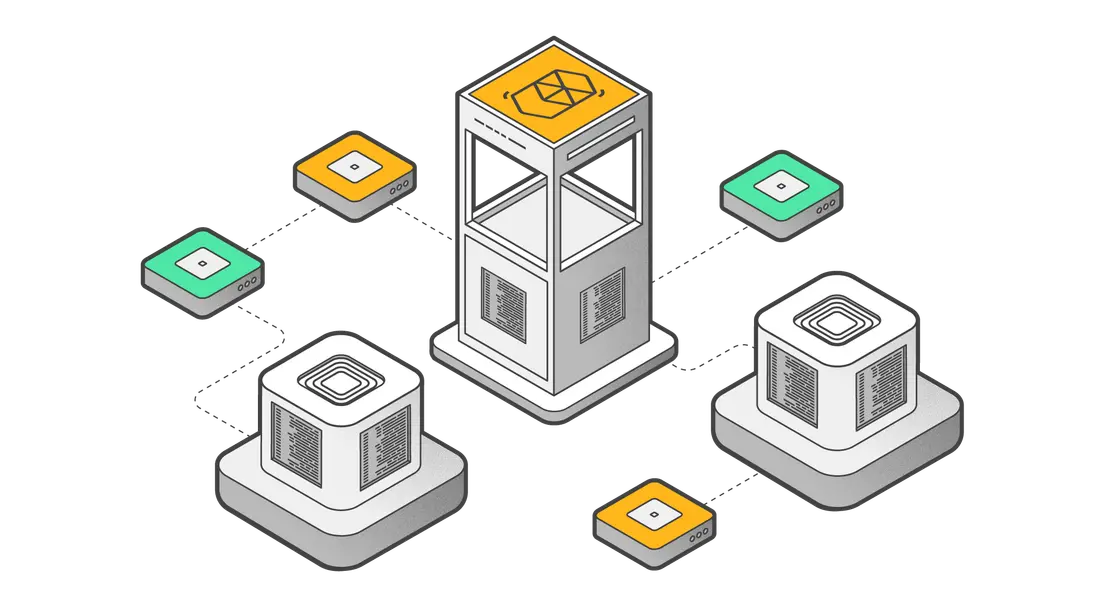
When FTX collapsed, $8 billion in customer deposits were lost, but users who held crypto in non-custodial wallets lost nothing. The dividing line was between custodial and non-custodial wallets: the difference between a crypto platform holding your private keys as a custodian and you being in control of those keys.
The same story played out with Celsius ($4.7 billion frozen) and with Turkey's Thodex in 2021. Self-custody is one of the most important concepts in crypto and one of the least explained. This guide covers what each term actually means, what the real-world stakes are, and which option makes sense depending on how much you hold and how you use it.
What Is a Custodial Wallet?
A custodial wallet is one where a third party holds your private keys. You have an account balance; the platform controls the underlying assets. A good analogy is a bank account. When you deposit money at a bank, the bank holds it, and you hold a claim. If the bank is solvent and cooperative, you can access your funds. If it isn't, your claim joins a queue of other claims, and the outcome depends on regulators, courts, and whatever remains of the institution's assets.
Crypto exchanges work the same way. When you buy Bitcoin on Coinbase, Binance, or Kraken, that Bitcoin sits in the wallets controlled by the exchange. Your account balance is a liability on their books.
What Happens When a Custodian Fails
The table below isn't a list of edge cases. These are (or were) some of the most widely used platforms in their respective markets - and yet they suffered hacks or a collapse.
Exchange | Year | What Happened | User Funds Lost |
|---|---|---|---|
Mt. Gox | 2014 | Hacked; 850,000 BTC stolen | $460M at the time ($68B at May 2026 prices) |
Bitfinex | 2016 | Hacked; 120,000 BTC stolen | ~$72M at the time |
Celsius | 2022 | Insolvency: funds frozen | ~$4.7B in user funds frozen |
FTX | 2022 | Fraud and collapse | ~$8B in customer deposits are missing |
Thodex (Turkey) | 2021 | CEO exit-scammed users | ~$2B; 391,000 users affected |
In every single case, users who held their own keys were unaffected. The losses fell entirely on people whose crypto was sitting on the platform. That's what "not your keys, not your coins" means in practice.
Regulated exchanges in some jurisdictions do offer limited protections; US exchanges are required to hold customer assets separately, and some cash balances qualify for FDIC coverage up to $250,000. But FDIC insurance doesn't cover crypto holdings, and "regulatory compliance" didn't prevent FTX from misusing customer funds for over a year before the collapse.
What Is a Non-Custodial Wallet?
In a non-custodial wallet, you hold the private keys. No exchange, company, or government can freeze your funds, reverse a transaction, or block a withdrawal. The analogy here is cash in a home safe; only you know the combination, and access doesn't depend on anyone else staying solvent. Your private key is a unique mathematical string that proves ownership of whatever is associated with your on-chain address. Non-custodial wallets generate and store this key locally: on your phone, on a hardware chip, or in a file on your computer. The blockchain doesn't care who you are; it responds to whoever presents the correct private key.
This is the architecture that made self-custody wallets immune to every exchange collapse in the table above. Nobody can freeze your funds (though, admittedly, a hot self-custody wallet can get hacked). Here, it’s useful to reiterate what a crypto wallet is and what it actually does: it is a piece of software or hardware that stores the private key that proves your ownership of the crypto coins (which live on the blockchain rather than in the wallet itself).
The Seed Phrase: Core of Non-Custodial Security and Its Main Weakness
Most non-custodial wallets generate a 12- or 24-word seed phrase during setup; this follows the BIP-39 standard. Write those words down in order, and you can restore your entire wallet on any compatible device, even if the original is lost or destroyed. That's the upside.
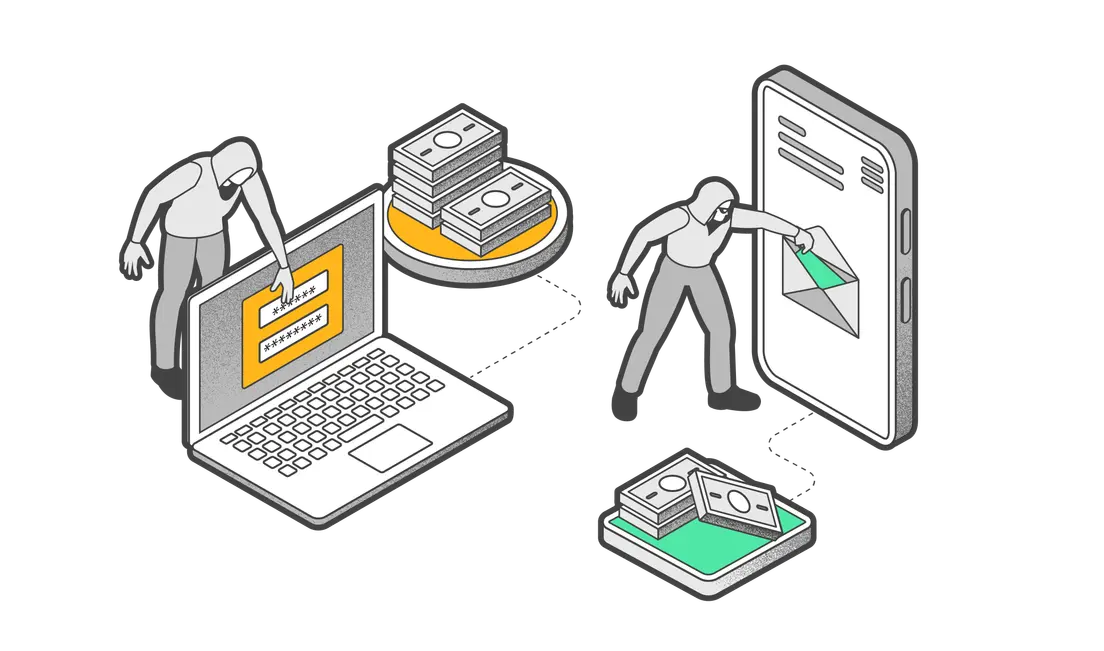
The downside is that anyone who has those words has your wallet. All of it, immediately, with no recourse. This is why seed phrases are the primary target for crypto theft. Common attack vectors include:
- Phishing sites mimicking wallet apps that ask you to "verify" your phrase
- Malware that scans clipboard content and screenshots for word sequences
- Social engineering; fake "support agents" on Telegram or Discord requesting the phrase to "restore access."
- Physical theft of the paper or metal plate where the phrase is stored
According to Chainalysis research, millions of Bitcoins are permanently inaccessible because seed phrases were lost rather than stolen. Both failure modes, exposure and loss, are real. Understanding how to protect your crypto from phishing scams reduces the exposure risk; good physical security reduces the loss risk. Neither fully eliminates it.
The Spectrum of Custody: A Full Map
Non-custodial isn't binary; there's a meaningful spectrum from "fully dependent on a third party" to "mathematically impossible for anyone else to access."
Wallet Type | Who Holds Keys? | Seed Phrase? | Online? | Security Level | Example |
|---|---|---|---|---|---|
Exchange (custodial) | Exchange | No | Yes | ⭐ | Coinbase, Binance |
Software wallet | You | Yes (12/24 words) | Yes (hot) | ⭐⭐ | MetaMask, Trust Wallet |
Hardware wallet, seed-based | You (via chip) | Yes | No (cold) | ⭐⭐⭐⭐ | Keystone, BitBox02 |
Hardware wallet, seedless | You (via chip) | No | No (cold) | ⭐⭐⭐⭐⭐ | Tangem |
Each step up the table removes a risk category:
- The move from exchange to software wallet removes counterparty risk.
- The move from software to hardware removes online exposure.
- The move from seed-based to seedless hardware removes the seed-phrase failure mode.
These aren't incremental improvements; each one closes a fundamentally different attack surface.
Pros and Cons: A Detailed Comparison
Custodial Wallets: Convenient, but You Don't Own Your Crypto
Custodial platforms are very convenient: they handle key management, offer account recovery via email, support fiat on-ramps directly, and provide customer service when things go wrong. For someone who just bought $50 of Bitcoin to see how it works, the cognitive overhead of self-custody probably isn't worth it yet. Regulated exchanges in the US, EU, and, increasingly, other jurisdictions also have compliance requirements that provide a baseline of accountability.
The trade-offs include exchange insolvency risk, account-freeze risk during market stress or regulatory action, mandatory KYC requirements, and withdrawal limits when platforms get squeamish. Your crypto is their liability, and if at some point their liabilities exceed their assets, that's a problem you can't solve from the outside.
Non-Custodial Software Wallets: Self-Custody With a Paper Problem
MetaMask, Tangem Mobile Wallet, Trust Wallet, and Exodus are all non-custodial. You hold the keys, and no exchange can touch your funds. They're also free, widely compatible with DeFi protocols, and work across multiple chains. For active DeFi use and amounts you're comfortable treating as somewhat at risk, they're practical.
The limitation is that a hot wallet stays connected to the internet, and the seed phrase is a single point of failure. Have the phrase lost or stolen, physically or digitally, and you lose everything just as permanently. Software wallets are not where you want to keep significant savings; think of them as the spending account, not the savings account.
Non-Custodial Hardware Wallets (Seed-Based): Cold Storage Done Right
Devices like Tangem, Keystone 3 Pro, and BitBox02 store private keys on a dedicated offline chip. Transactions are signed on the device and never expose the key to an internet-connected environment. For large holdings, this is far more secure than a software wallet.
The latter two, Keystone and BitBox02, still require seed phrase management. The Keystone 3 Pro uses QR codes for air-gapped signing and supports Shamir Secret Sharing for advanced backup schemes. The BitBox02 is a minimalist Swiss-made device with open-source firmware. Both are serious options for technically confident users who are willing to manage a 24-word recovery phrase correctly: metal plate, two locations, tested recovery, documented for inheritance. If you're comfortable with that process, either is a solid choice. The crypto wallet security checklist covers what "correctly" looks like in practice.
Tangem: Non-Custodial, Hardware-Level Security Without the Seed Phrase Risk
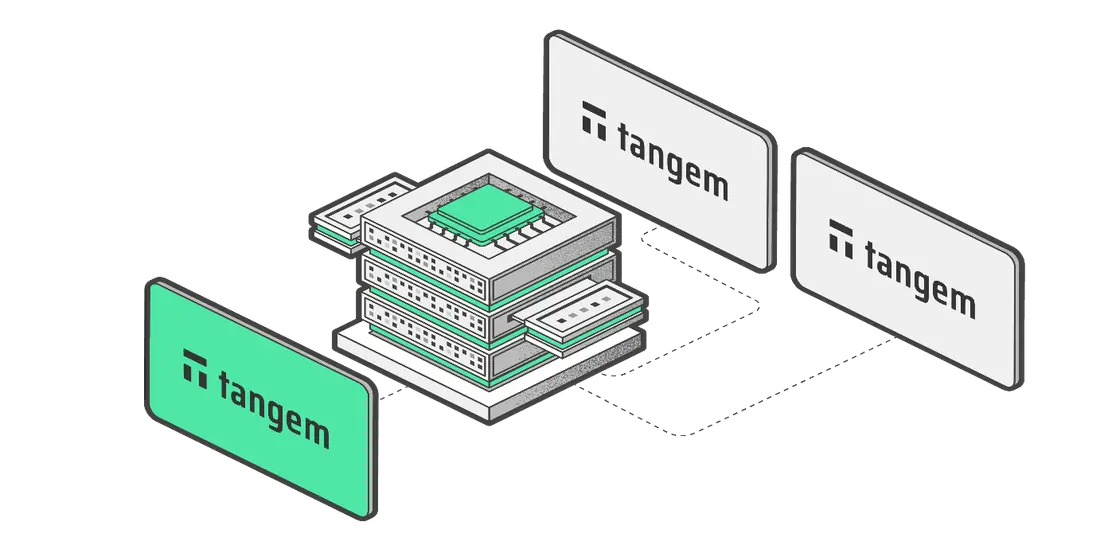
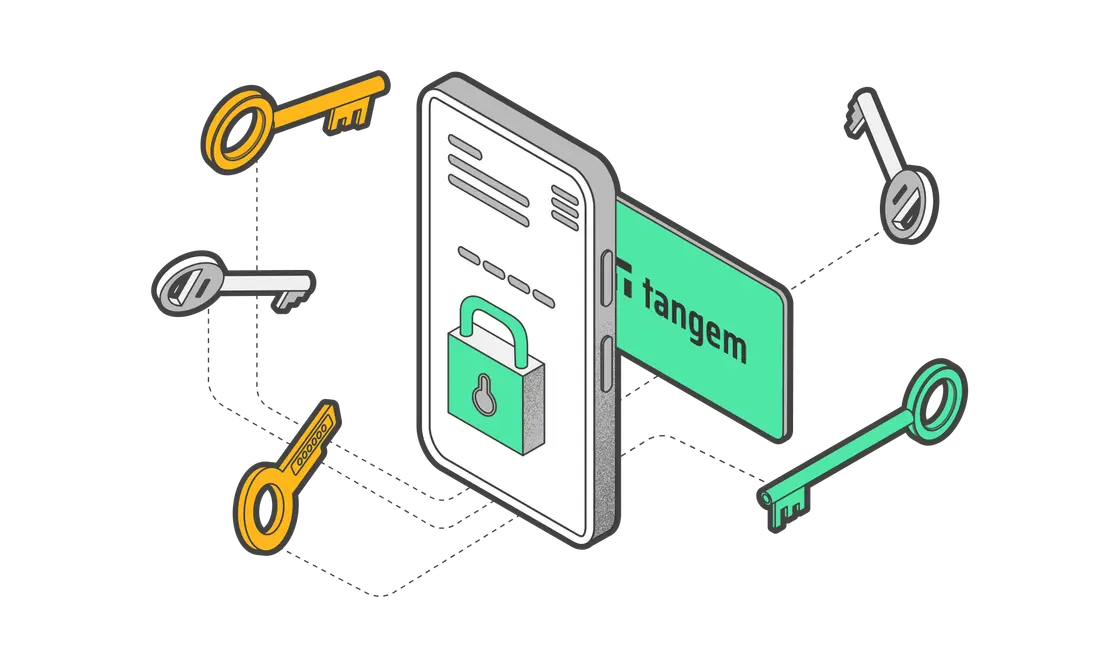
Tangem takes a different architectural approach. The private key is generated in an EAL6+ certified secure element chip, but no seed phrase is generated during the default setup. Instead of a seed, Tangem uses a physical backup: a second (and third) card holds an identical key. If you lose one card, just tap the backup. The three-card set means you can distribute copies across locations or give one to a trusted family member, with inheritance planning built into the product design.
In daily use, the experience is a tap. Open the Tangem app, tap the card to your phone to see your balance; to send, enter the amount and tap again. NFC works on any modern iPhone or Android; no cables, no browser extensions, no desktop software required. The app includes built-in swaps, native staking, Yield Mode to earn on stablecoins via Aave, and Market Pulse to track prices, all accessible without leaving the app or visiting an exchange.
For a deeper look at how this category compares, the guide to best seedless wallets covers the options in detail. And if you're in the market more broadly, the best hardware wallet comparison covers the full field.
When to Use Each Type
Situation | Best Wallet Type |
|---|---|
Holding $100 or less, just starting out | Exchange custodial (simplicity matters at this stage) |
Holding $500–$5,000, active DeFi use | Non-custodial software wallet (MetaMask, Trust Wallet) |
Holding $5,000+, long-term storage, tech-confident | Seed-based hardware wallet (Keystone, BitBox02) |
Holding $5,000+, non-technical user | Tangem: hardware security, no seed phrase complexity |
Receiving regular crypto income | Tangem: hardware protection for recurring inflows |
Elderly family member or inheritance setup | Tangem: 3-card backup, NFC simplicity, no phrase to document |
The right answer isn't always the most secure option. It's the most secure option you'll actually use correctly. A seed phrase written on a single piece of paper and stored next to the device is worse security than a custodial exchange with 2FA, even though it's technically "self-custody."
How to Switch From Custodial to Non-Custodial
Here's how the upgrade works with Tangem as the destination; the same steps apply to any non-custodial wallet, with the address substituted.
- Set up Tangem. Download the app, tap card 1 to your phone, and set a PIN. Your wallet address is generated on the chip in about two minutes. Tap cards 2 and 3 to activate them as backups.
- Get your receiving address. In the Tangem app, select the asset (USDT, BTC, ETH), tap "Receive," and copy the address. Double-check the network matches what you'll be sending.
- Withdraw from your exchange. Log in, go to Withdraw, select the asset and network, and paste your Tangem address. Send a small test amount first, 10 USDT or a similarly small sum, and wait for it to appear in the Tangem app.
- Transfer the rest. Once the test confirms, send the full amount. Your assets are now on-chain and under your control. The exchange can freeze its accounts; it cannot freeze yours.
FAQ: Custodial vs Non-Custodial Wallet
Is a non-custodial wallet safer than an exchange?
For holding crypto long-term, yes, provided you manage your private key correctly. The risks you're facing are counterparty risk (exchange collapses, hacks, freezes) and key management risk (losing or exposing your seed phrase). A seedless hardware wallet like Tangem removes almost all key management risk from the equation.
Can I lose crypto with a non-custodial wallet?
Yes, in two ways: losing your seed phrase with no backup, or losing all copies of your backup cards in a seedless setup. Both are preventable with basic precautions: two locations, tested backups, and a trusted family member holding a spare. The losses almost always come from people who skipped those steps.
Is MetaMask custodial or non-custodial?
Non-custodial. MetaMask generates a seed phrase at setup, and you control the keys. It's a hot wallet, though, always connected to the internet, which makes it vulnerable to phishing and malware in ways that hardware wallets are not. Self-custody and hardware security are different properties.
What's the difference between non-custodial and self-custody?
Nothing. They're the same concept described from two angles. Non-custodial means no third party holds the keys. Self-custody means you hold them yourself. Both phrases describe the same arrangement.
Do I need a non-custodial wallet for DeFi?
Yes. DeFi protocols connect to wallets you control directly; exchanges can't interact with on-chain protocols on your behalf. MetaMask and Trust Wallet are the most common entry points for DeFi. Tangem also supports DeFi interactions via WalletConnect, so you can use hardware-secured keys for DeFi transactions instead of a hot wallet.
What happens to my Tangem wallet if my phone is stolen?
Nothing, practically speaking. Your crypto is on the blockchain, not on the phone. The Tangem app on the stolen device is useless without the physical card, and the card requires your PIN. Neither the thief's phone nor the stolen card alone provides access. Both are needed, along with the correct PIN.
Final Thoughts
The custodial vs non-custodial question is ultimately about who you trust to keep your assets safe. Custodial wallets require you to trust the exchange. Non-custodial wallets require you to trust yourself, or, in the case of a seedless hardware wallet, trust the physics of a secure chip.
For small amounts and early-stage learning, exchanges are fine. The convenience is real, and the stakes are low. Once you're holding anything you'd be upset to lose, the calculus changes. A non-custodial wallet moves you outside the blast radius of exchange collapses, hacks, and regulatory freezes. A hardware wallet eliminates the online exposure associated with a software wallet. A seedless hardware wallet removes the seed phrase as a single point of failure.
Tangem sits at the end of that spectrum: non-custodial, offline, and backed by a physical card system rather than a piece of paper. For most people who want serious security without the operational overhead of traditional cold storage, that's the practical destination.


Don't miss these 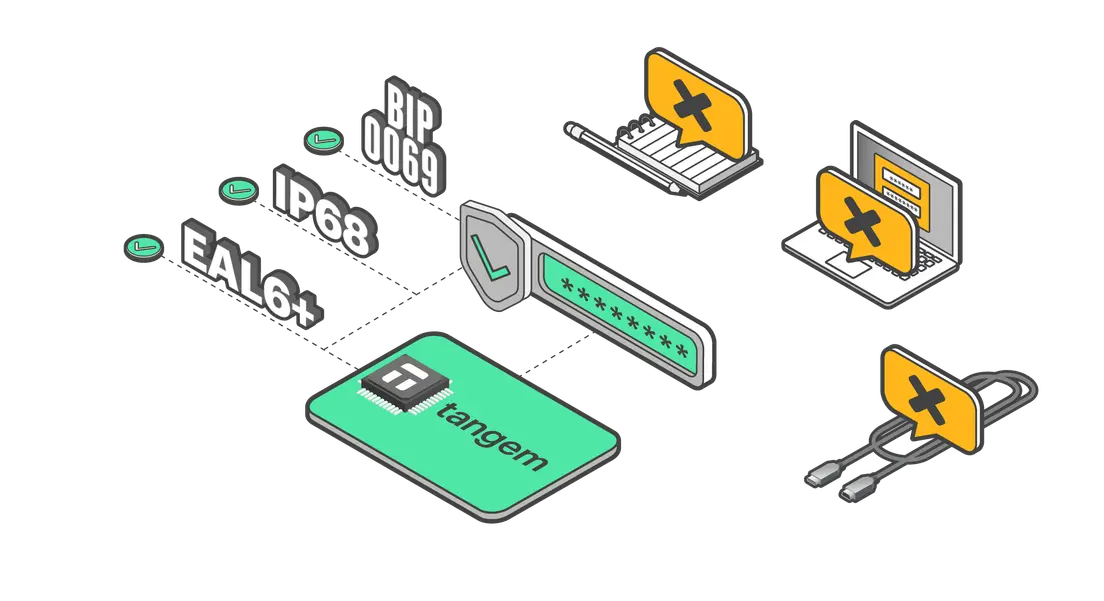
Other articles

